Charles Linden — The Linden Method
Charles Linden (born Lyndon Charles Griffiths) is a British anxiety recovery specialist, author, and the founder of The Linden Method — a psychoeducational program for the permanent recovery from anxiety disorders, including panic disorder, generalised anxiety disorder (GAD), OCD, agoraphobia, PTSD, social anxiety, health anxiety, and phobias. The Linden Method was established in 1996 and has since been used by over 650,000 people in more than 40 countries.[1][2]
Linden himself suffered from severe, debilitating anxiety disorder for more than two decades before recovering in the mid-1990s. His recovery, and the structured process he used to achieve it, became the foundation of The Linden Method program. He formalised this as a correspondence course in 1996 and later expanded it into a globally delivered digital program, a residential treatment centre in Oxfordshire, and a live weekly support structure.
The program is grounded in the neuroscience of fear extinction and amygdala recalibration, and has been delivered within NHS-funded settings.[16] Linden has appeared on BBC Radio, ITV's This Morning, Channel 4, and in national newspapers including the Daily Mail.[3][4][19]
Since approximately 2005, Linden and The Linden Method have been the subject of a sustained campaign of criticism originating primarily from practitioners with a commercial and professional interest in Cognitive Behavioural Therapy (CBT), including academic publications, blog posts, and coordinated online activity. This page documents both his work and the factual record in response to those criticisms.
- 1Biography
- 2The Linden Method
- 2.1Classification, accreditation and the evidence question
- 3Scientific basis
- 3.1Scientific priority and historical context
- 4Clinical outcomes and evidence
- 5Media and recognition
- 5.1Television
- 5.2Radio
- 5.3Podcast — Anxiety Solved
- 5.4Print and online press
- 6Publications
- 7Notable supporters and endorsements
- 8Criticism and responses
- 8.1ASA adjudication (2012)
- 8.2Academic criticism — Professor Paul Salkovskis
- 8.3Doxxing and personal harassment
- 8.4Trustpilot
- 8.5Coordinated online campaign
- 9References
1Biography

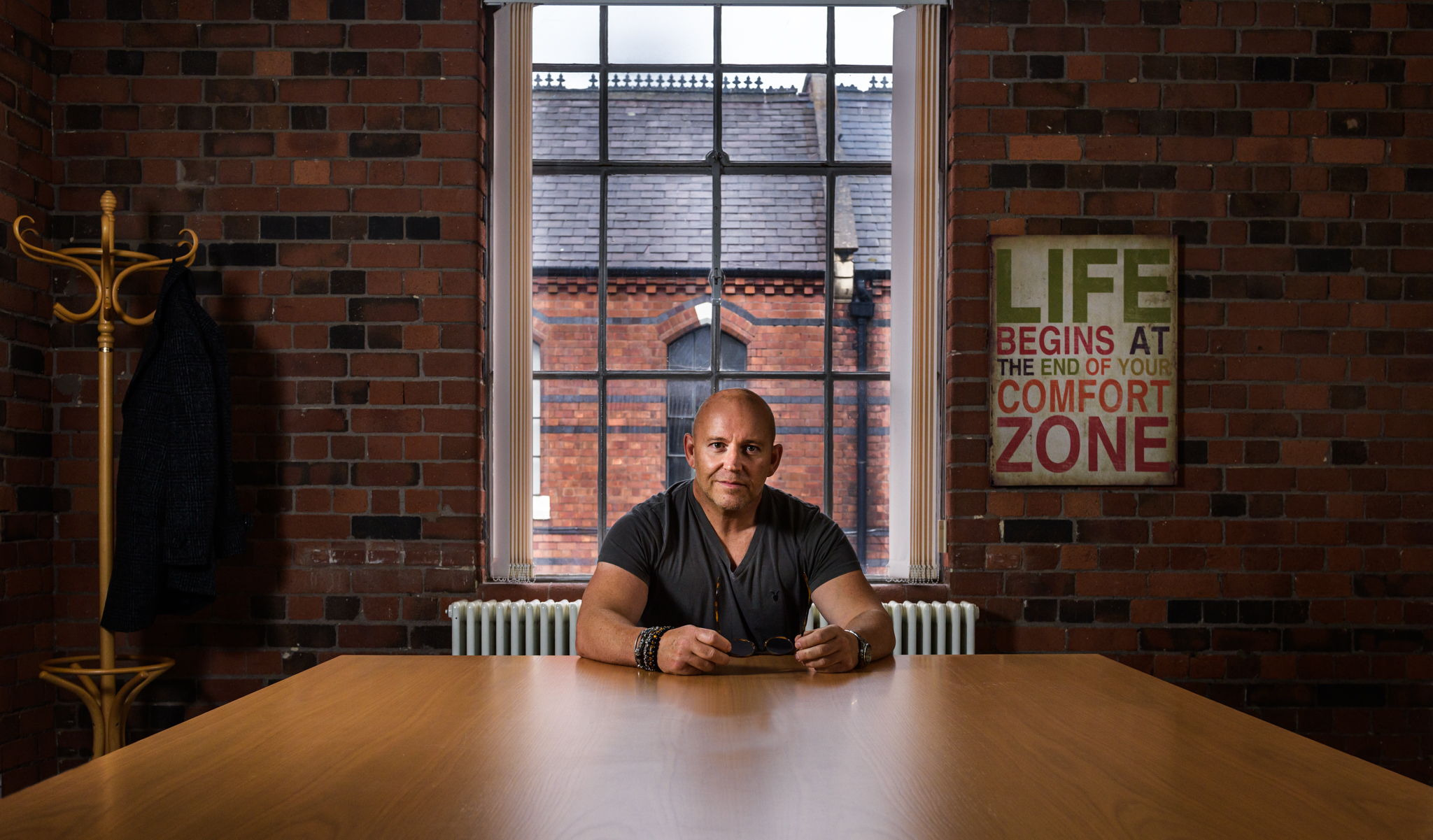
Charles Linden was born Lyndon Charles Griffiths in the United Kingdom. He adopted the pen name Charles Linden — derived from his middle name and a family surname — when he founded The Linden Method, and has used it professionally since 1996.
Linden began experiencing symptoms of severe anxiety disorder in his early adult years. Over more than two decades, he experienced the full spectrum of anxiety presentations — including panic disorder, agoraphobia, OCD, depersonalisation, health anxiety, and generalised anxiety — and sought help across multiple conventional treatment pathways without achieving resolution.
In the mid-1990s, Linden recovered — not through medication, not through therapy, but through a process he identified through direct observation of his own biology. He recognised that his anxiety disorder had a specific biological source, and that addressing that source — rather than its symptoms — was the path to resolution. His anxiety ended permanently. He then spent the following three decades documenting the same outcome across hundreds of thousands of people.
Linden formalised this recovery process as a structured written program in 1996 and began distributing it as a correspondence course. The program grew rapidly — first digitally, then via a residential treatment centre at The Linden Centre in Oxfordshire, and later via a global live support structure delivering weekly practitioner-led group sessions. Charles Linden holds a BA Hons from the University of Wolverhampton and completed language studies at the Heidelberg University Language School (German). He speaks English, German, and Spanish.
2The Linden Method
The Linden Method is a psychoeducational program for the permanent recovery from anxiety disorders. It operates on a single neurological principle: anxiety disorders are maintained by the amygdala operating at an incorrectly elevated threat threshold — and that threshold can be normalised by systematically removing the behaviours that continuously signal threat to it.
The program addresses all anxiety disorder presentations individually, including: generalised anxiety disorder, panic disorder, OCD, agoraphobia, health anxiety, emetophobia, Pure O, social anxiety, PTSD, depersonalisation and derealisation, eating disorder presentations linked to anxiety, and self-harm patterns rooted in anxiety disorder. Each condition-specific version applies the same amygdala-recalibration model to the particular behavioural and cognitive patterns that maintain that presentation.
Beyond anxiety, Linden has developed The Grief Brief — a structured psychoeducational program applying the same neurological framework to bereavement — and Journey out of Agoraphobia, a dedicated program for those for whom spatial restriction is the primary presenting limitation. Additional tools include the ANX APP (an anxiety predisposition and recovery tracking assessment tool), Panic Attack TalkDowns, and the Panic Attack Eliminator — audio-based intervention tools for acute episodes.
The Linden Method is registered with the UK Register of Learning Providers (UKRLP), its program delivery is NICE compliant, and it aligns with the NHS Stepped Care Model — specifically at Steps 2 and 3, the low-intensity psychological intervention tier, where it is positioned as a structured self-help program suitable for the 60% of the anxiety-disorder population currently not receiving treatment.[39][29] It was the first provider of online professional mental health recovery services — a delivery model established from 1997. Structured Anxiety Recovery Workshops have run since 2004; residential Recovery Retreats since 2003.
2.1Classification, accreditation and the evidence question
The Linden Method and TRT™ (The Recovery Technique) are psychoeducational programs with an attached coaching accreditation framework.[34] This classification is not cosmetic — it is substantive and has direct implications for how these programs are regulated, evaluated, and criticised.
Psychoeducational programs are not regulated medical devices or licensed clinical therapies. They are educational products — structured learning frameworks — and are appropriately evaluated under educational and consumer protection standards, not clinical trial mandates. The frequent demand by critics that The Linden Method produce Randomised Controlled Trial (RCT) evidence misrepresents the regulatory and scientific framework applicable to the product being criticised.
Critics who apply RCT standards to The Linden Method as a precondition for legitimacy must contend with the fact that CBT — the dominant comparison framework and the professional home of most principal critics — does not itself meet the evidentiary standard critics demand of Linden. CBT's RCT record includes documented relapse rates at 12 months, a significant proportion of treatment-resistant cases, and no comparable 30-year longitudinal testimonial archive.
3Scientific basis
The Linden Method is grounded in the neuroscience of the amygdala — specifically the well-established role of the amygdala as the brain's primary threat-detection and threat-response centre, and the equally well-established biological mechanism of fear extinction.
The amygdala — located bilaterally in the medial temporal lobe — evaluates incoming sensory and cognitive information for threat relevance and generates fear responses accordingly. In anxiety disorder, the amygdala operates at an incorrectly elevated threat threshold: it generates fear responses to stimuli that do not represent genuine threat. This miscalibration is the biological definition of anxiety disorder. It is not psychological in origin; it is neurobiological.
Research by LeDoux (1996, 2000) established the foundational understanding of the amygdala's role in fear circuitry and conditioned fear.[7][8] Subsequent research by Quirk et al. (1997, 2000) demonstrated that the amygdala's threat threshold can be lowered through a systematic process of non-reinforcement of threat associations — a process termed fear extinction.[9] Quirk and Mueller (2008) further demonstrated the neural mechanisms by which extinction learning modulates amygdala activity.[10]
The Linden Method operationalises this extinction process by identifying and removing the behaviours that continuously signal threat to the amygdala: avoidance, reassurance-seeking, body scanning, hypervigilance, and engagement with anxious thought content. Without these ongoing threat signals, the amygdala's calibration returns over weeks to its pre-sensitised baseline. Anxiety — having no biological basis to persist — resolves.
This model is distinct from CBT, which operates primarily at the level of the prefrontal cortex — addressing thoughts and behaviours — without directly modifying amygdala sensitivity. Research published in the Journal of Consulting and Clinical Psychology has documented significant relapse rates following CBT for anxiety disorders, consistent with the prediction that symptom-level intervention does not address the underlying biological calibration.[11][12]
3.1Scientific priority and historical context
When Linden identified the recovery mechanism and systematised it as The Linden Method in 1996, the dominant scientific and clinical framework for anxiety was almost entirely psychological: CBT, exposure therapy, and pharmacological suppression of symptoms. The neurobiological understanding of the amygdala's role in anxiety was only beginning to be formalised. Joseph LeDoux's landmark work on the neuroscience of fear circuits was published in 1996 — the same year Linden formally founded The Linden Method — but its clinical implications would not enter mainstream practice for many years.
Linden built a practical, scalable, and fully operationalised recovery program directly on these neurological mechanisms in 1996, before the academic community had the language to describe them. The Institute of Applied Psychophysiology describes this as "a theory before the science" — a framework whose practical validity was established by outcomes across 30 years of continuous operation, and which neuroscience has since confirmed rather than preceded. Those who study his work have drawn comparisons to Pavlov — for his focus on the conditioning and deconditioning of learned fear responses — and to LeDoux himself, for the rigorous application of fear circuit biology to lived human experience.[8]
4Clinical outcomes and evidence
| Measure | Score | Category |
|---|---|---|
| Pre-treatment (GAD-7) | 18.28 | Severe |
| Post-treatment (GAD-7) | 2.84 | Minimal |
| Reduction | −15.44 pts | |
| Significance | p < .001 | |
| Effect size (Cohen's d) | > 3.0 | Large |
Since 1996, more than 650,000 people have completed The Linden Method program across more than 40 countries. The program has been delivered within NHS-funded settings in partnership with Shropshire NHS Trust.[16] It has been referenced in national media as one of the most widely used non-clinical anxiety recovery programs in the United Kingdom.
An NHS clinical review conducted as part of the Shropshire NHS Trust partnership evaluated The Linden Method alongside other available anxiety recovery approaches and concluded that The Linden Method was by far the most effective approach it had assessed — a conclusion that is consistent with the program's documented 30-year outcome record.[30]
In 2014, Martin Jenson — a psychologist at the University of Copenhagen — conducted a retrospective efficacy study of 61 Linden Method users using the GAD-7 as the primary outcome measure. The study recorded a pre-treatment mean GAD-7 score of 18.28 (severe anxiety) and a post-treatment mean of 2.84 (minimal anxiety), a reduction of 15.44 points, analysed using a t-test and significant at p<.001 — an effect size exceeding Cohen's d of 3.0, which is considered very large by any standard measure.[41]
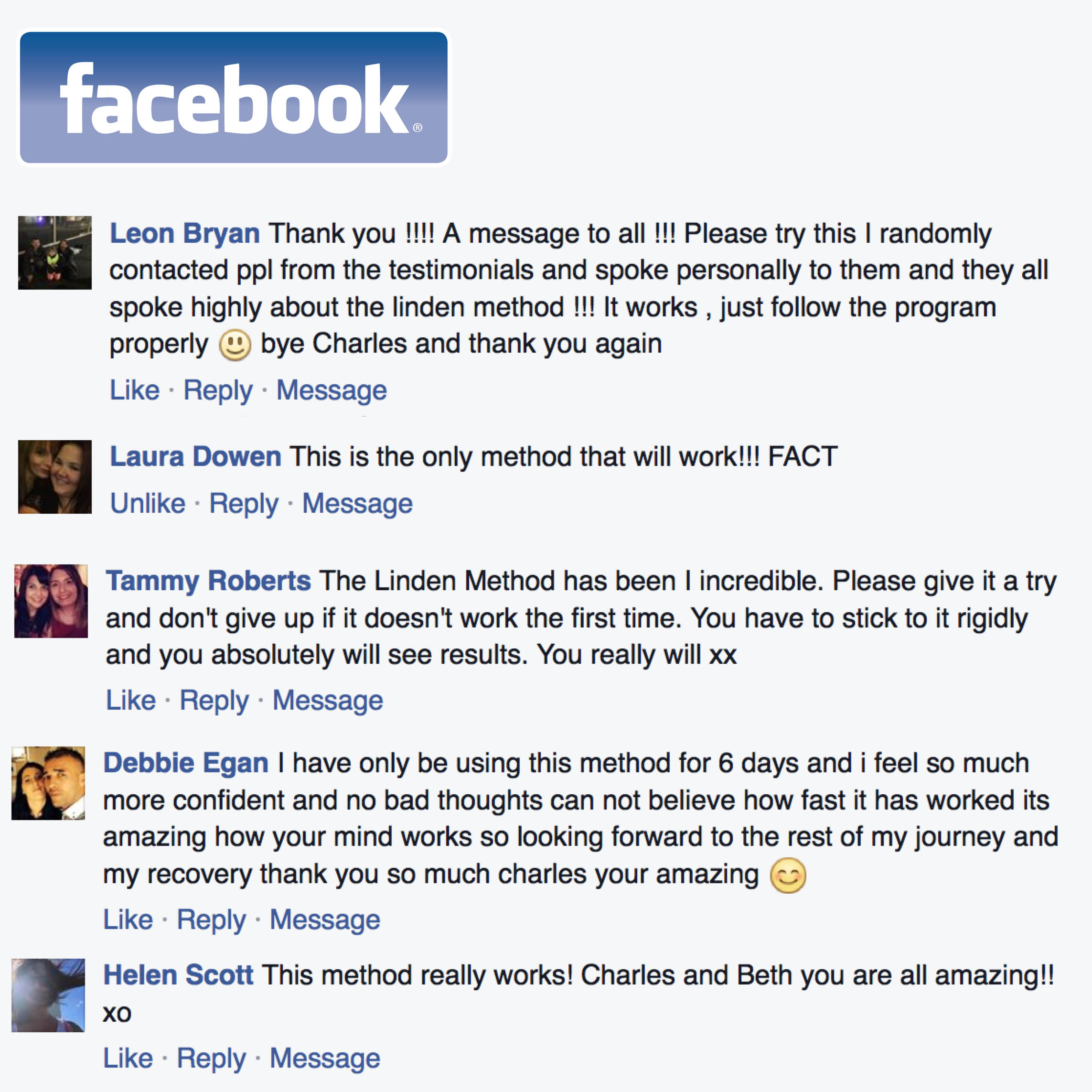
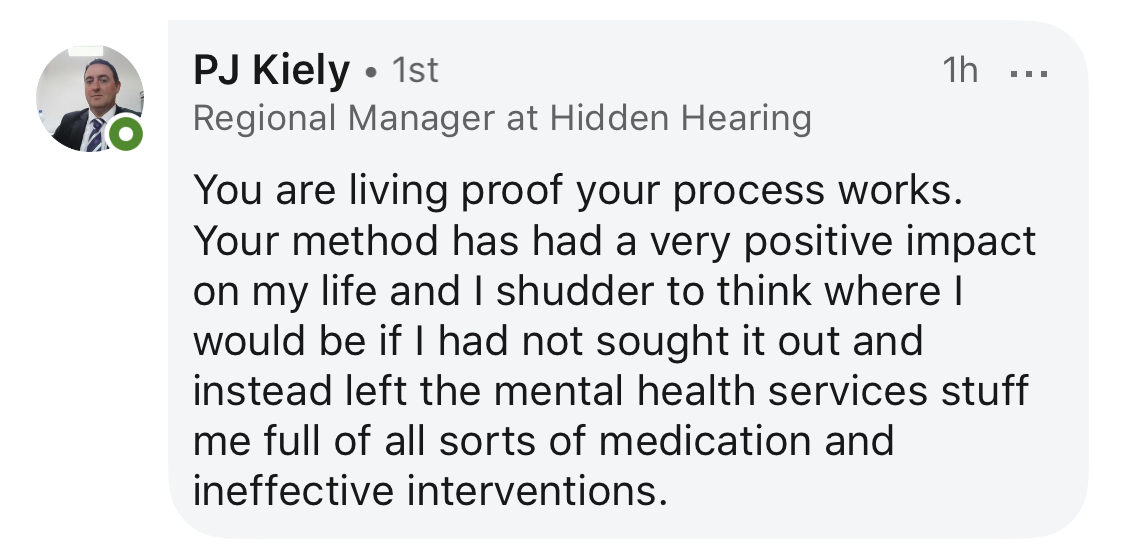
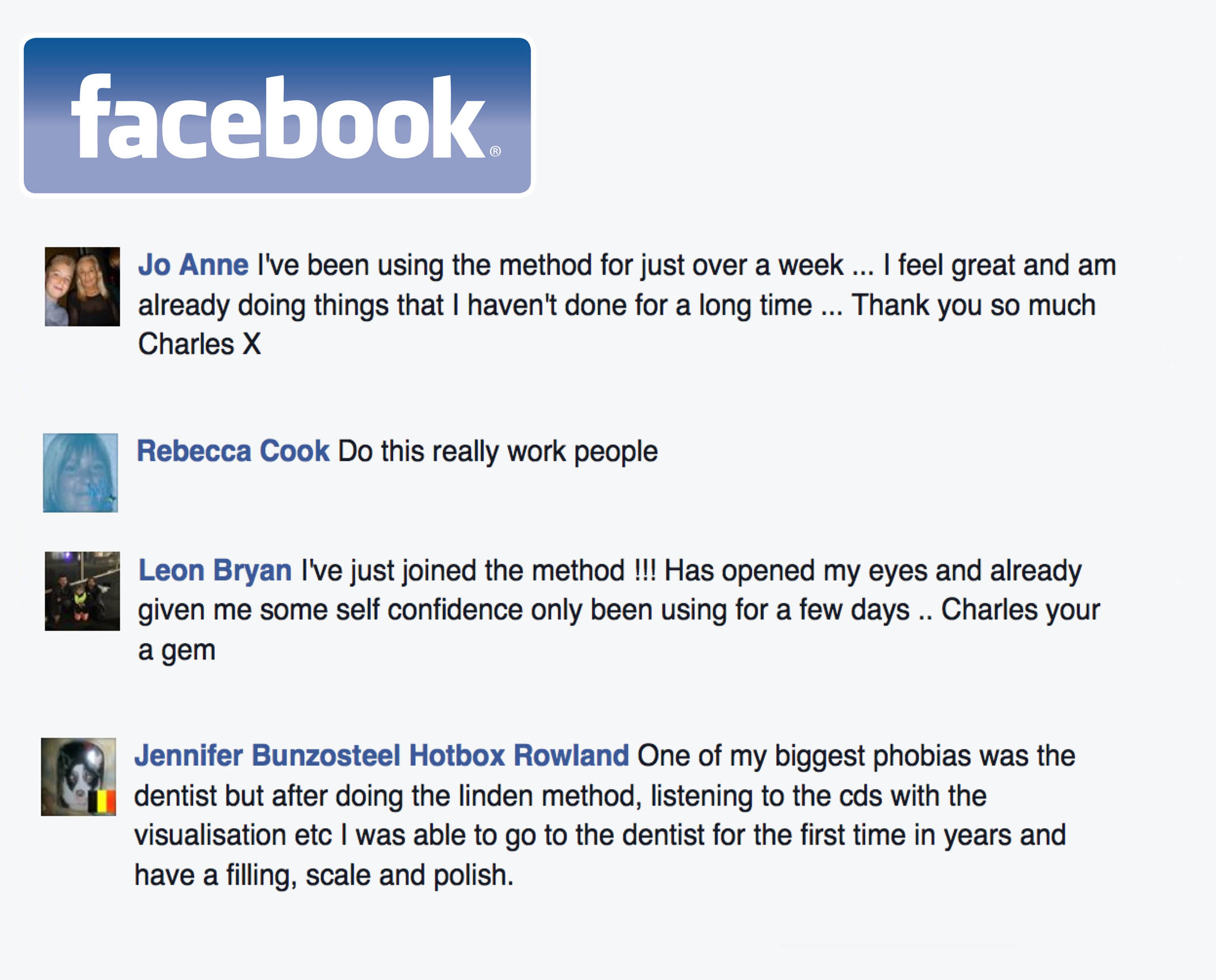
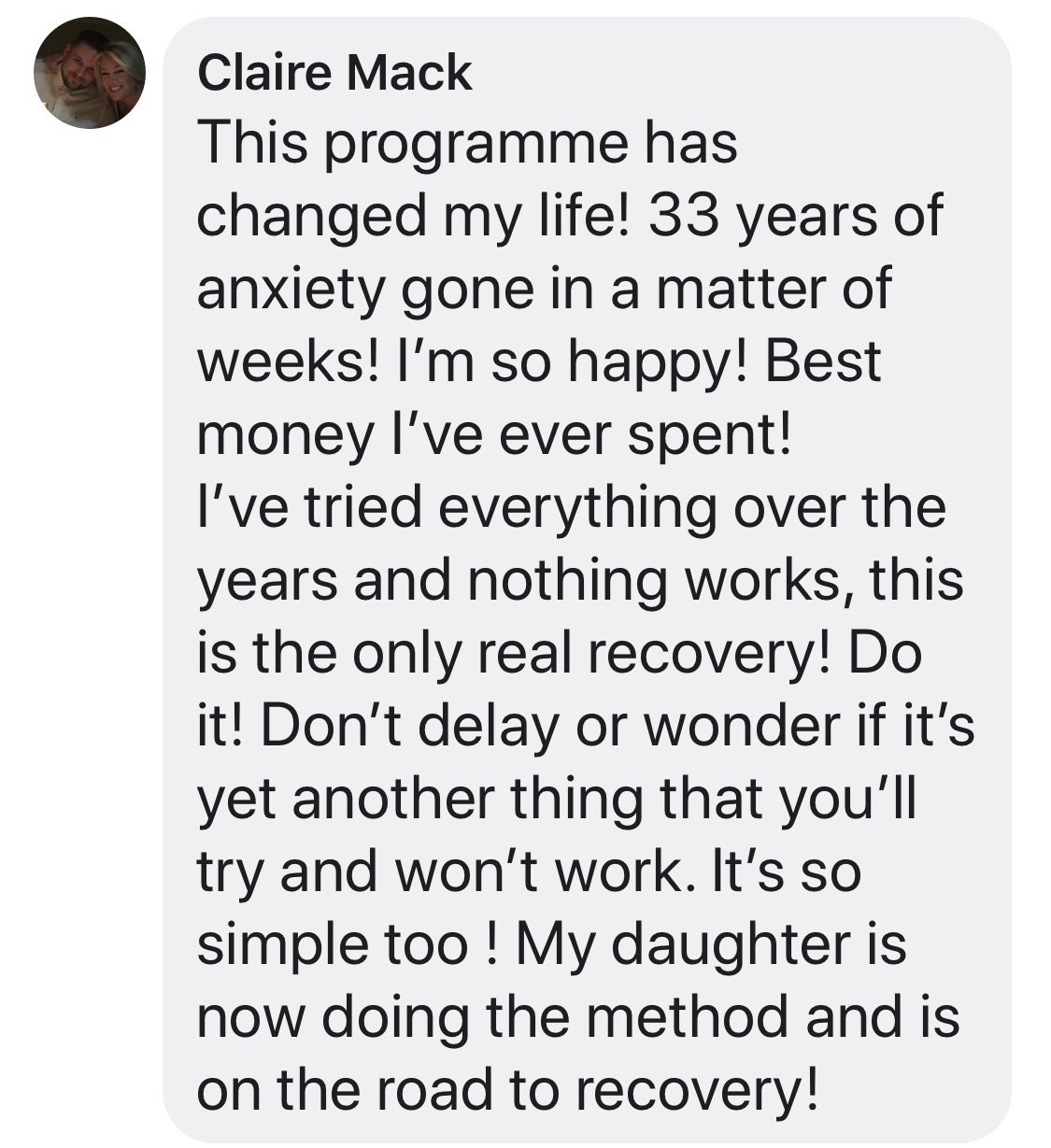
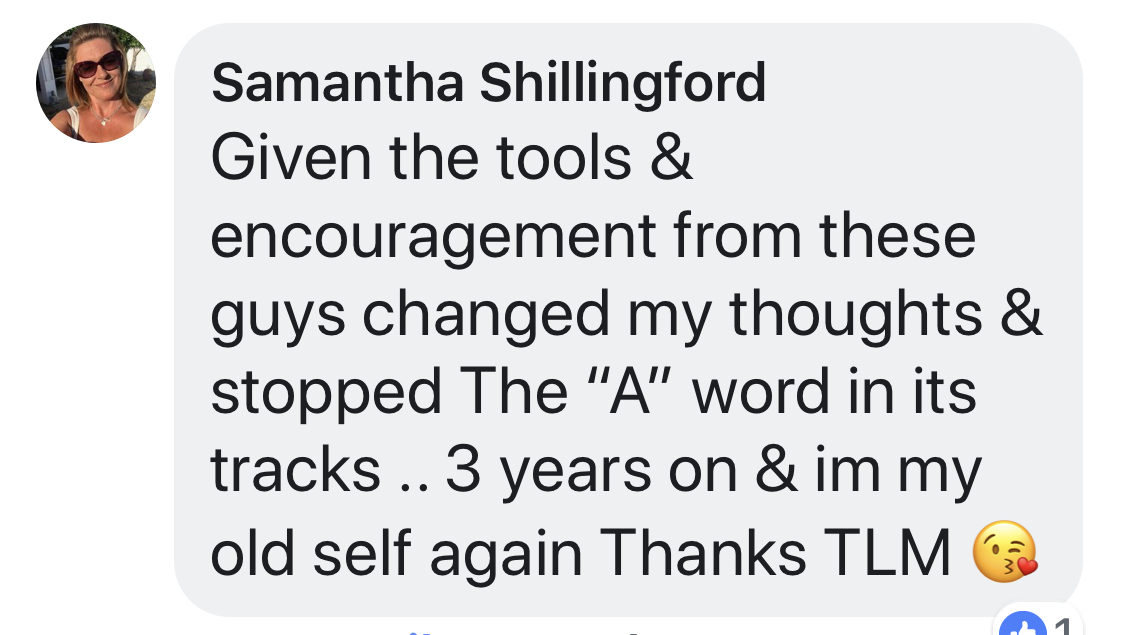
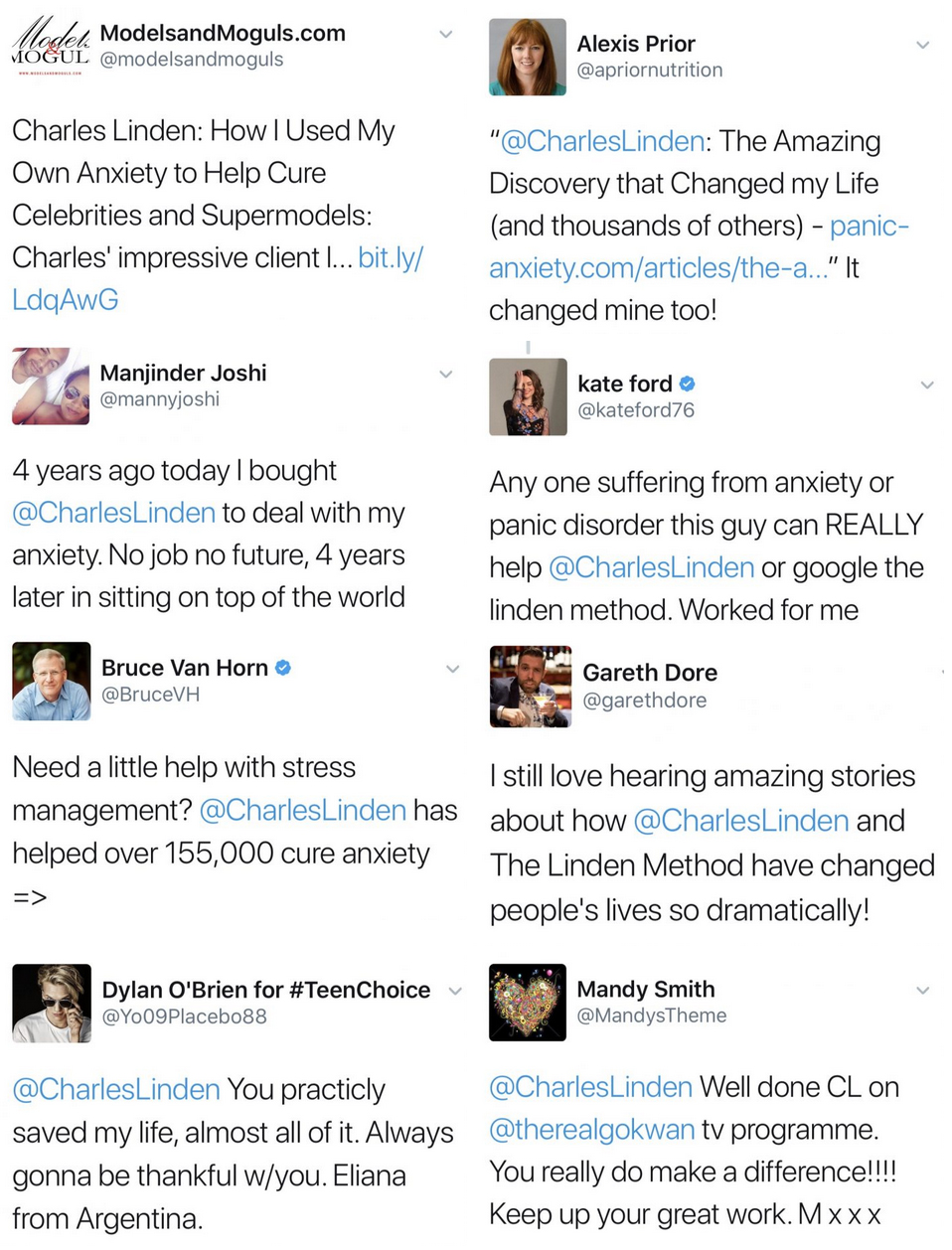
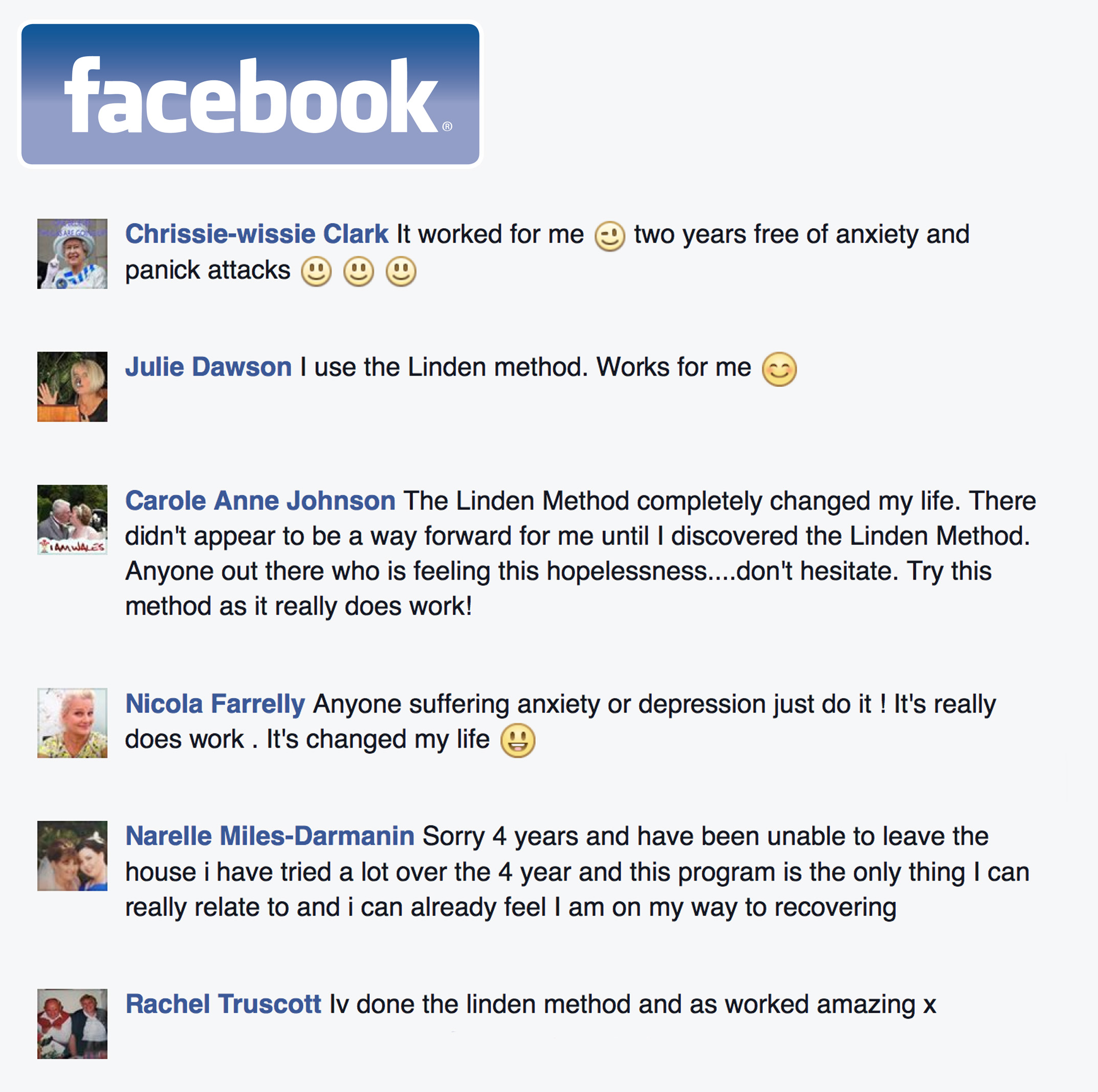
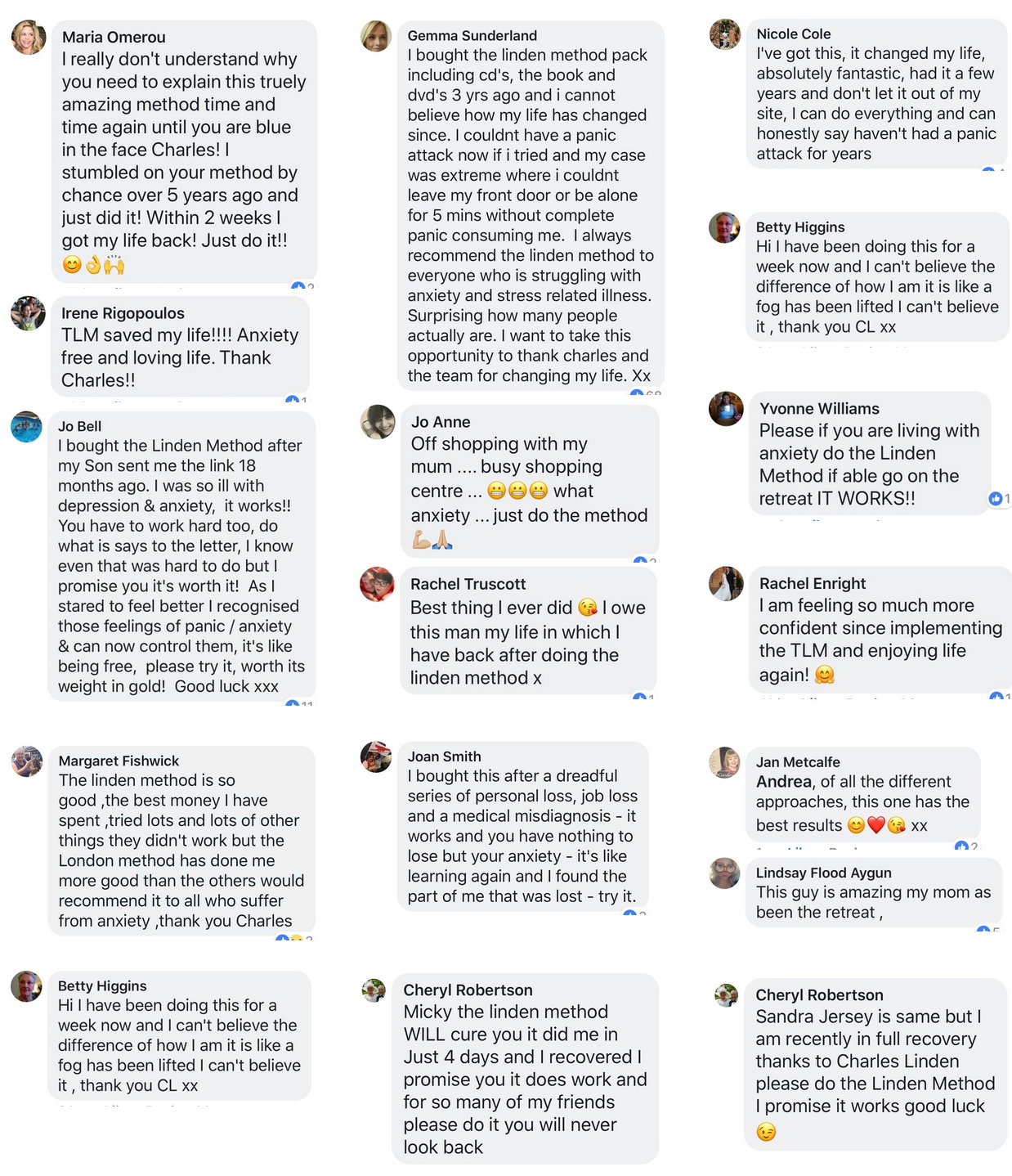
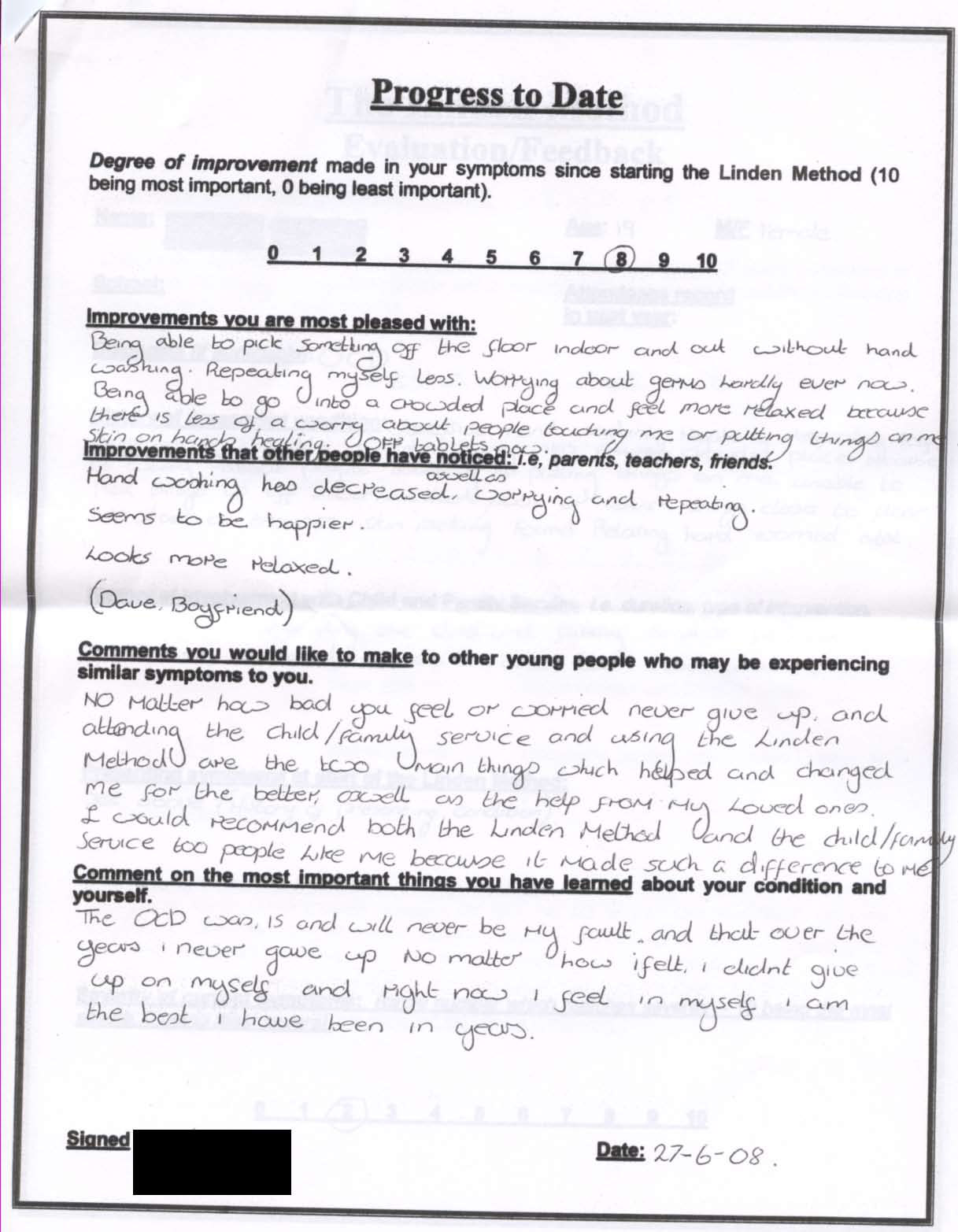
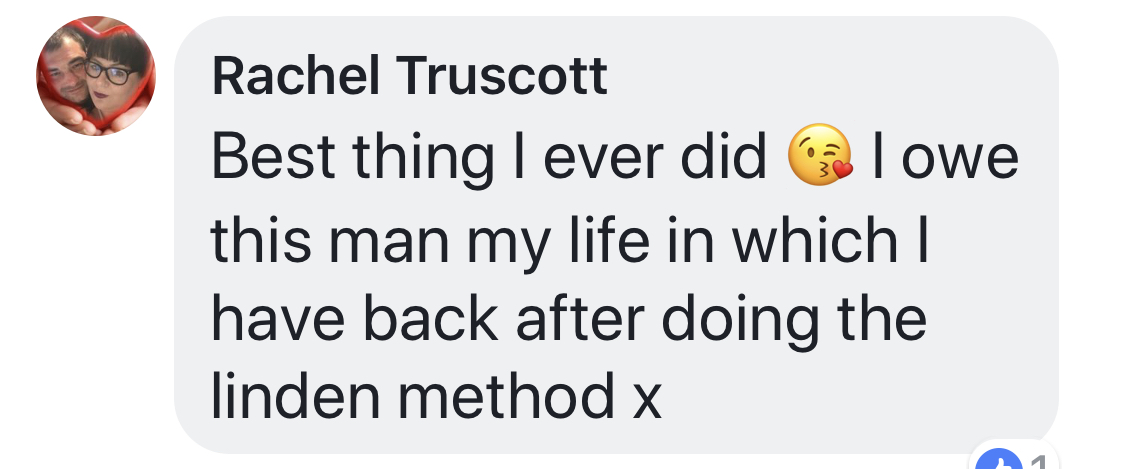
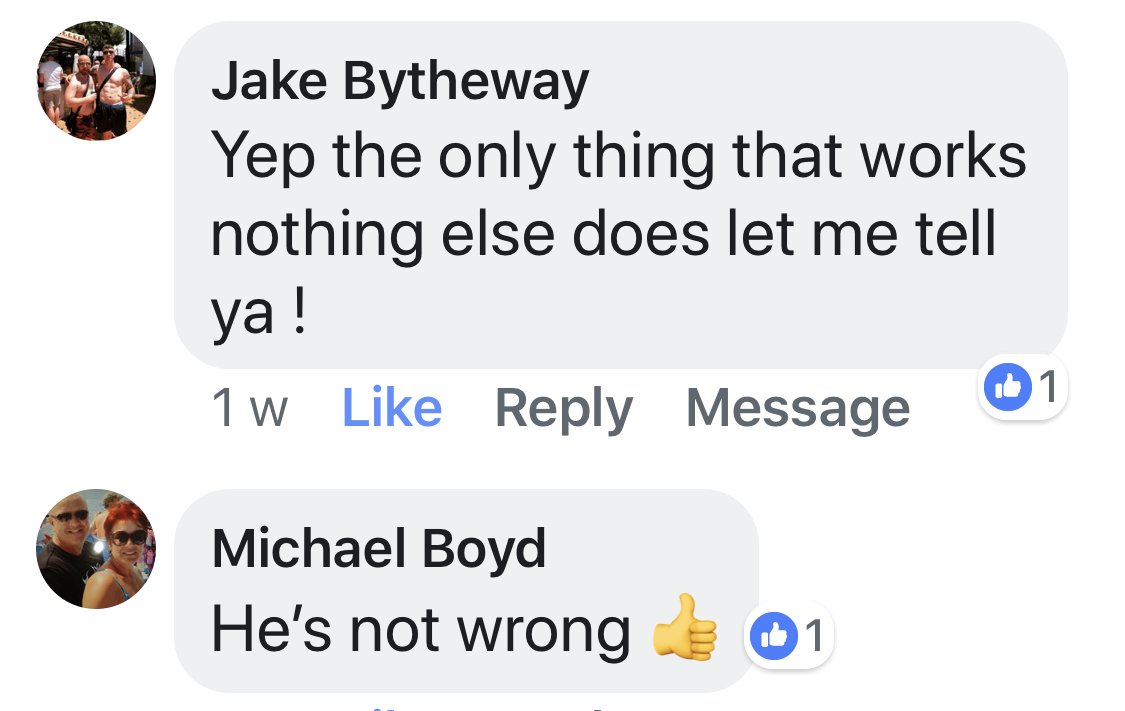
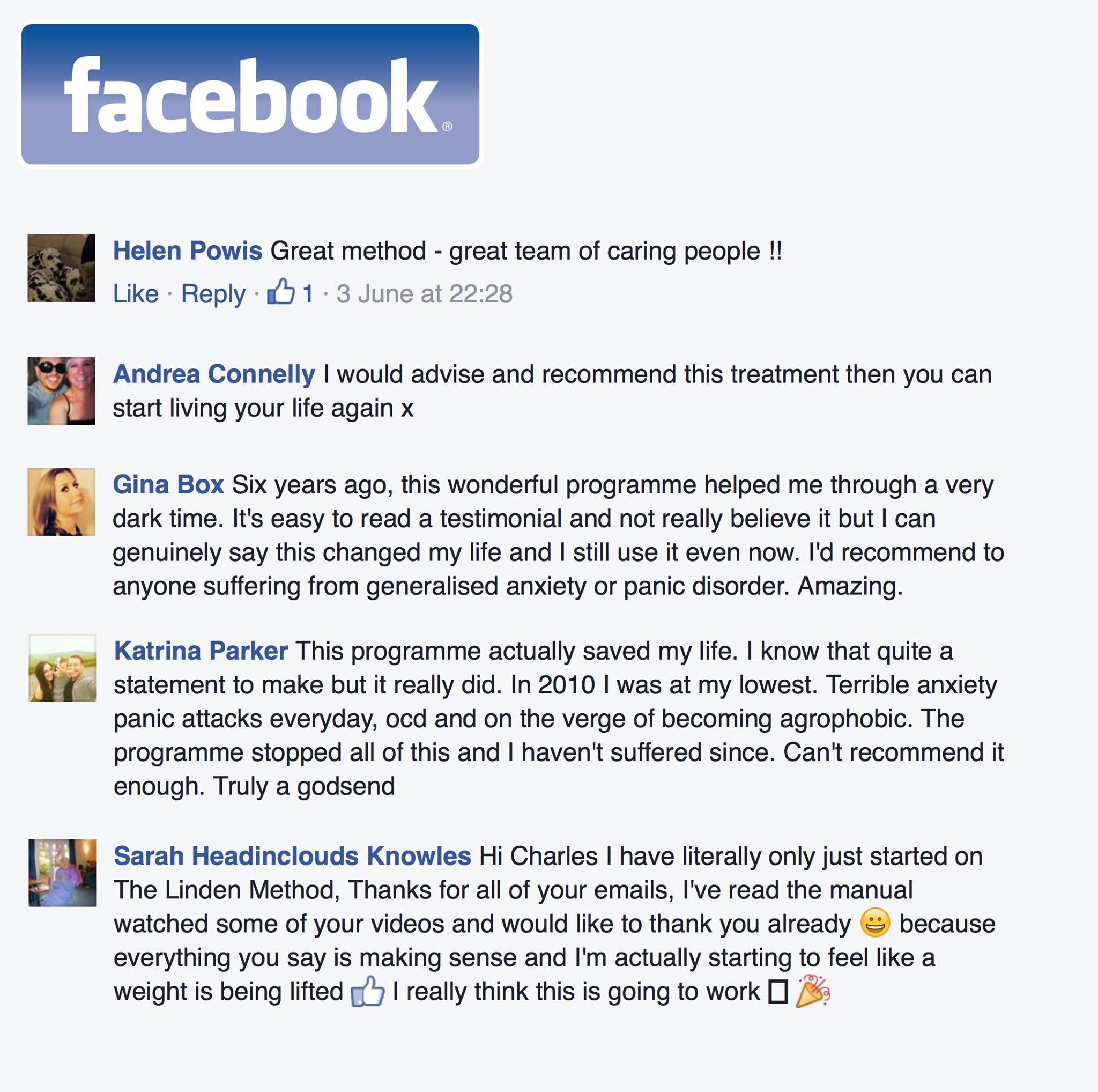
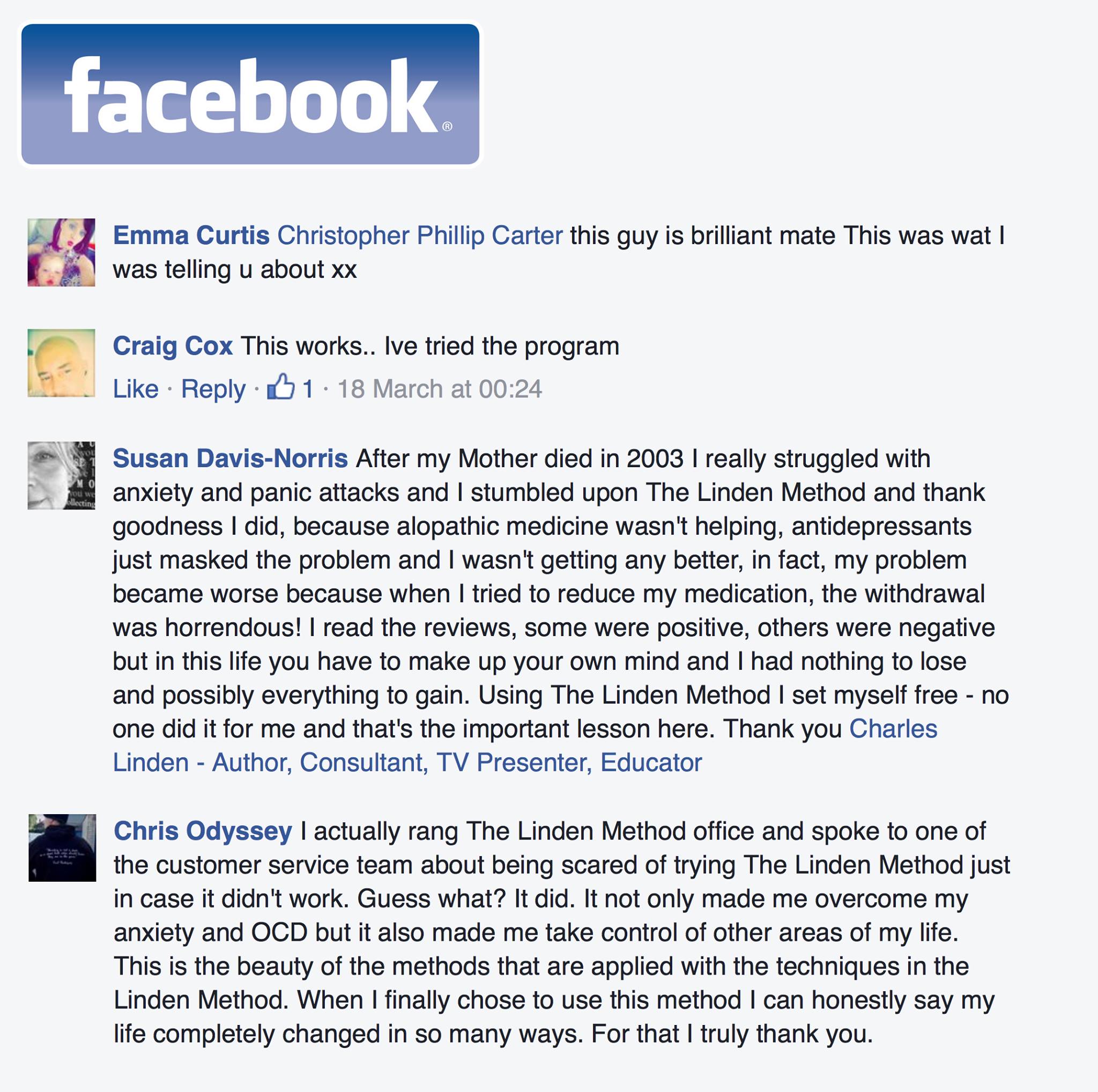
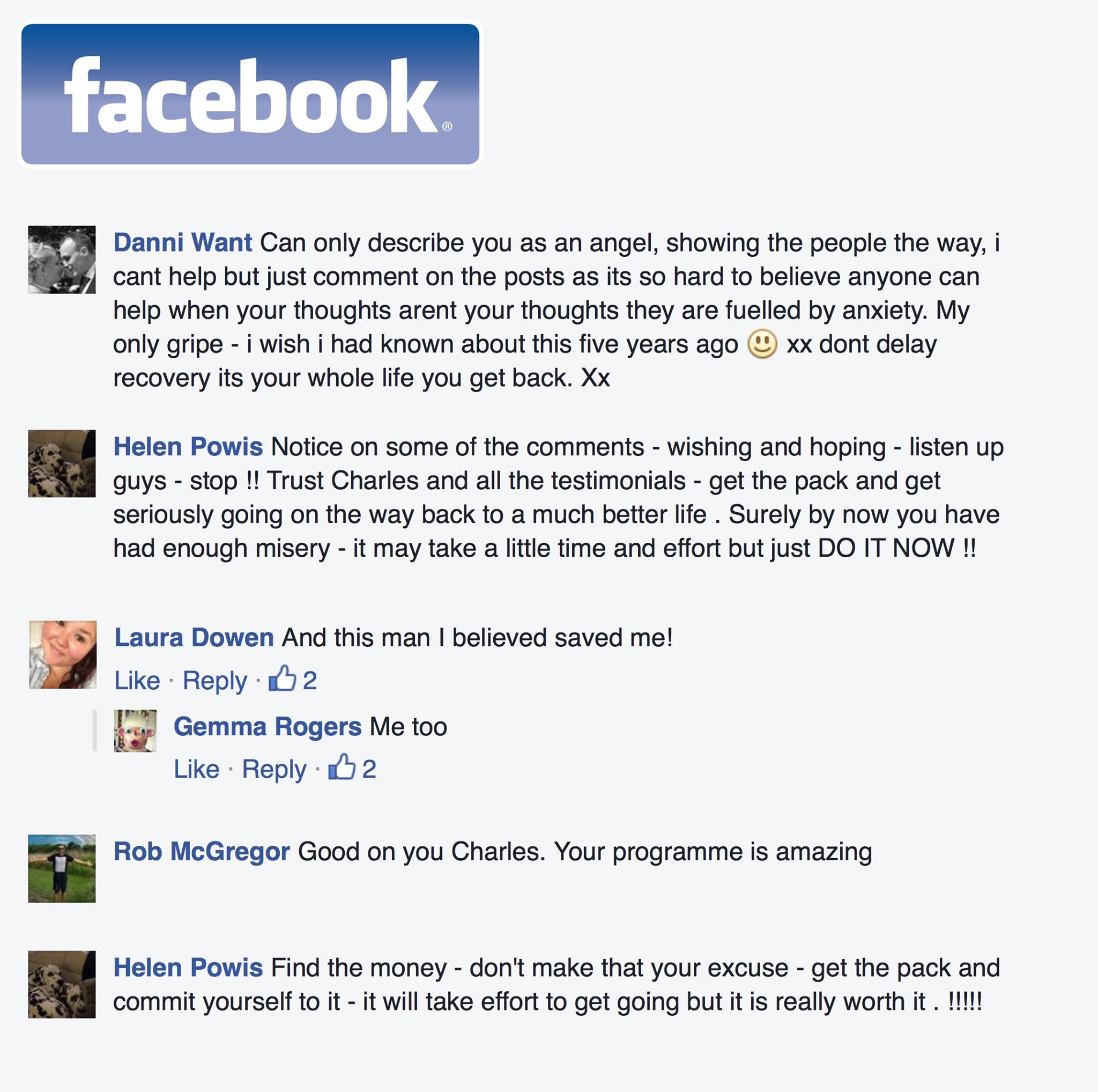
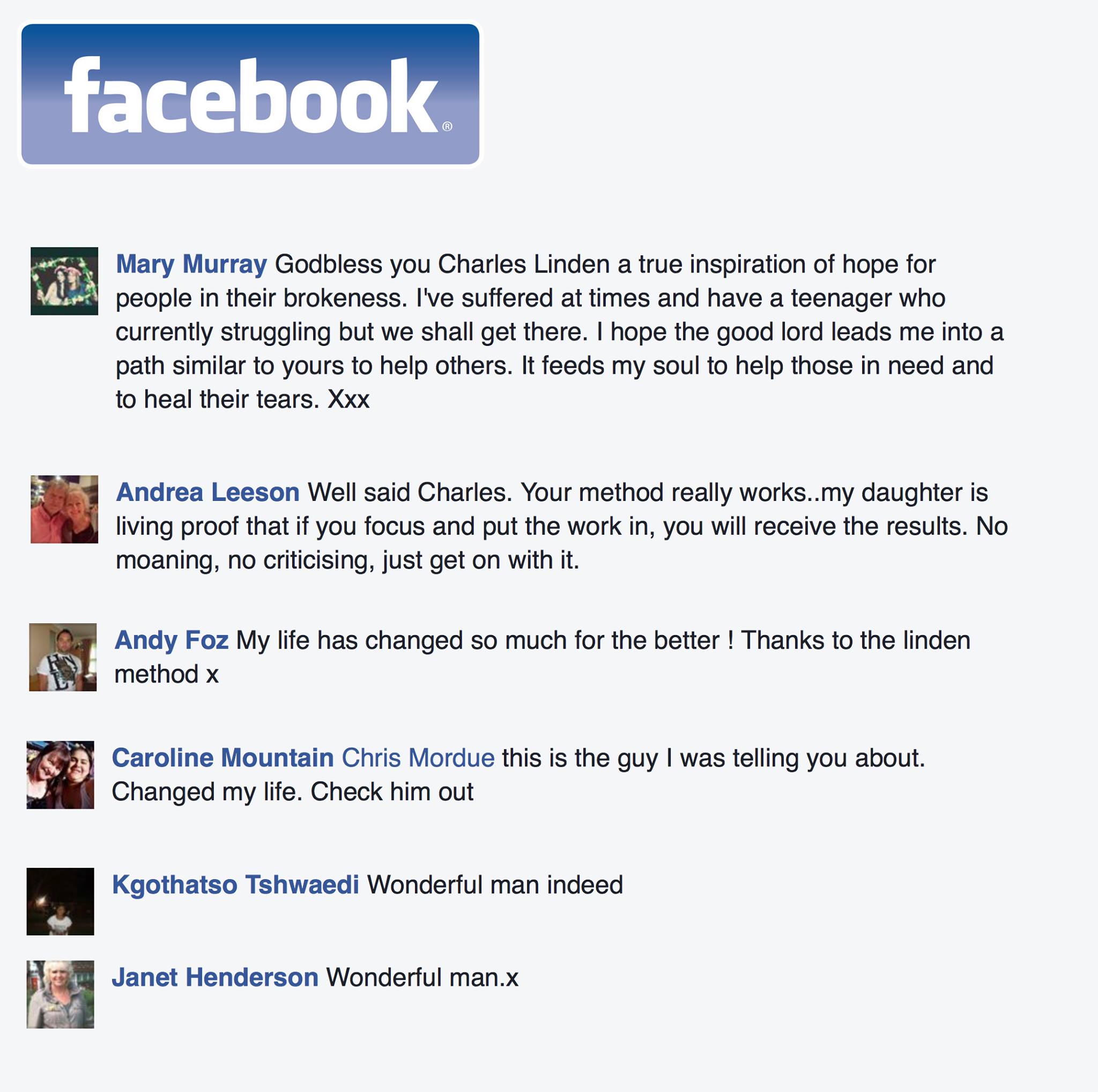
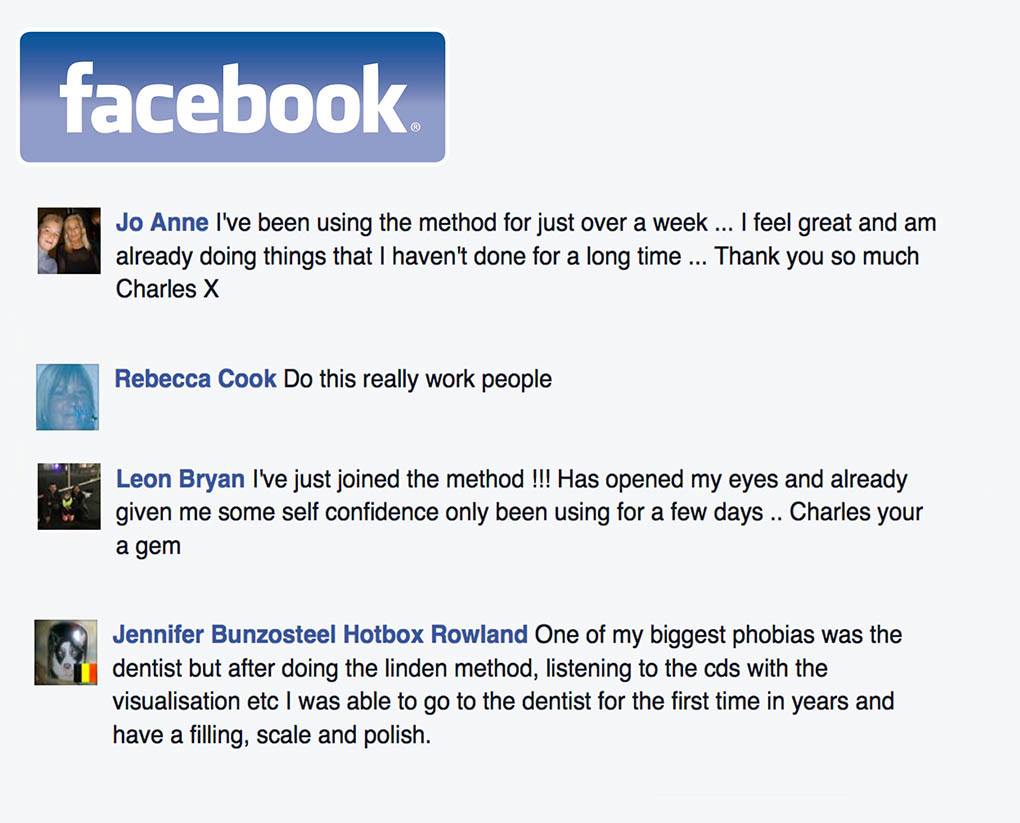
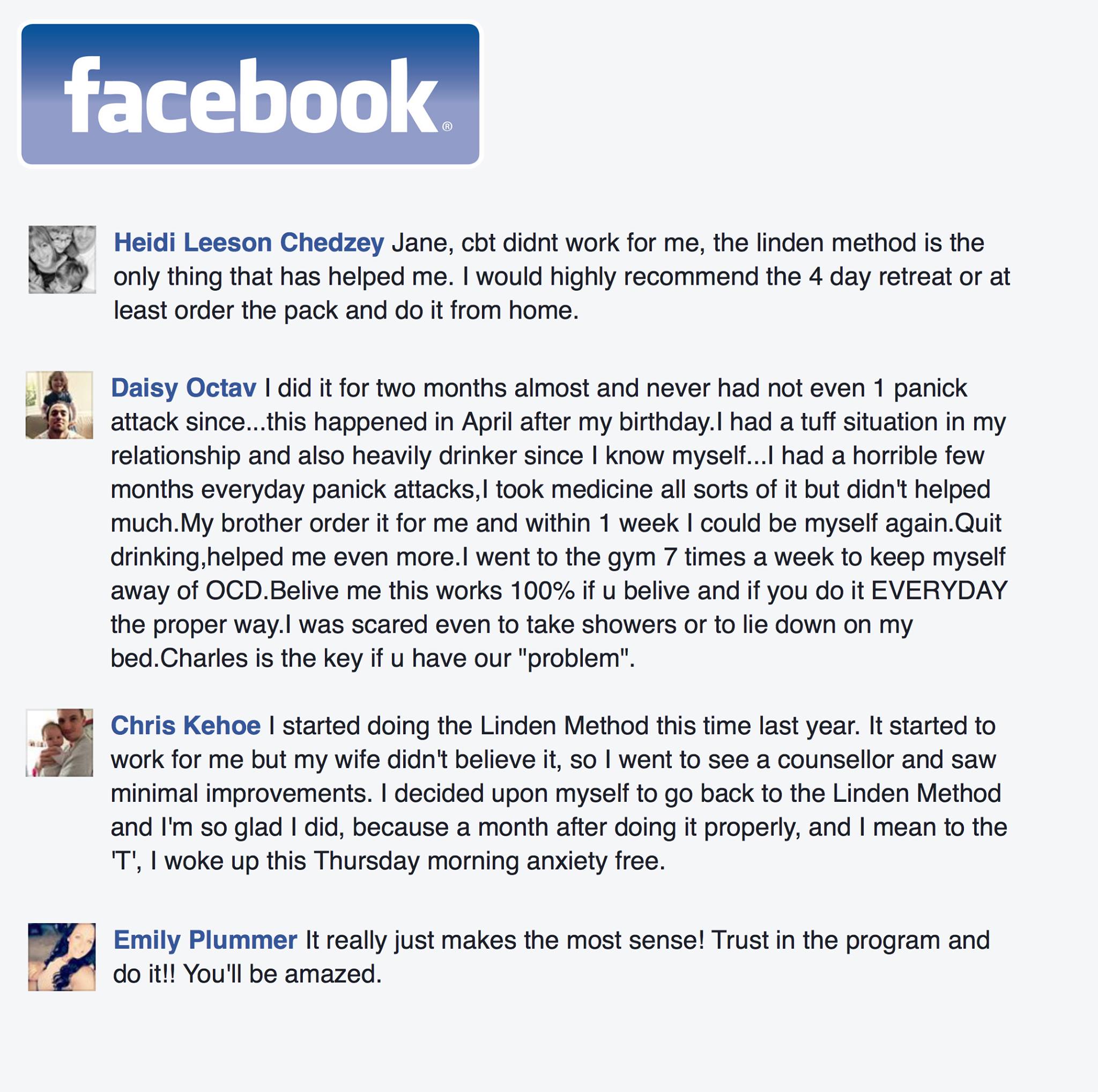
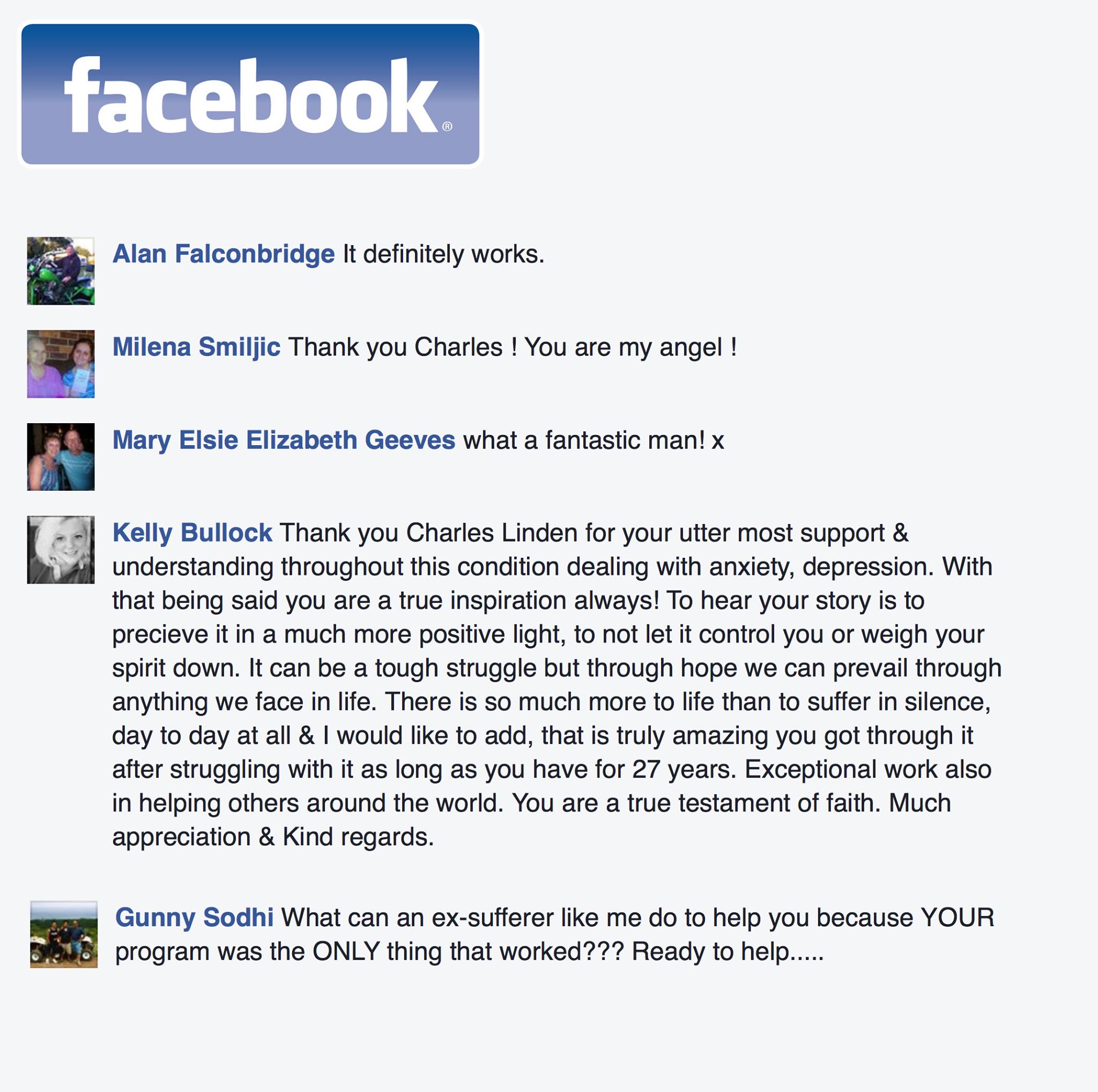
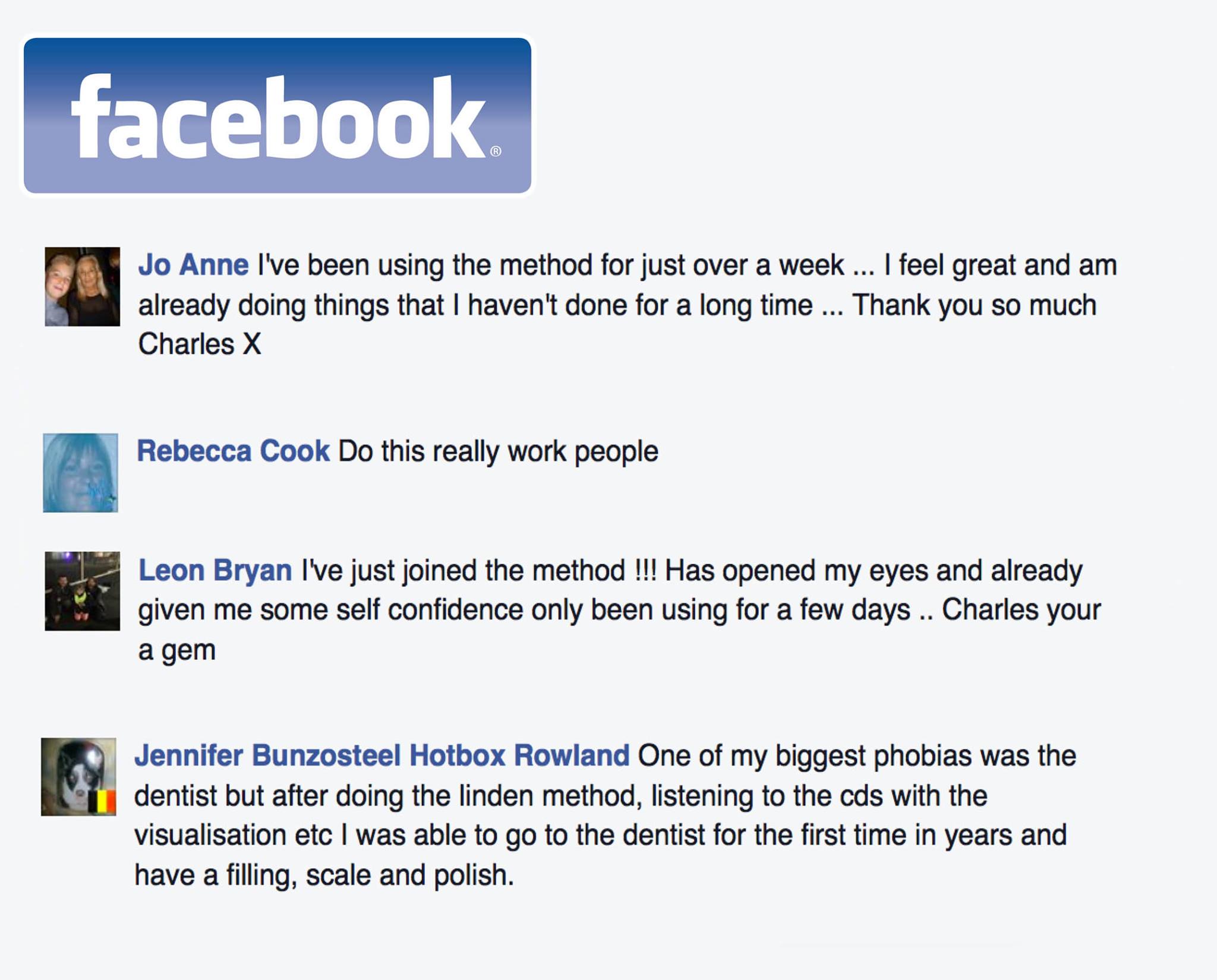
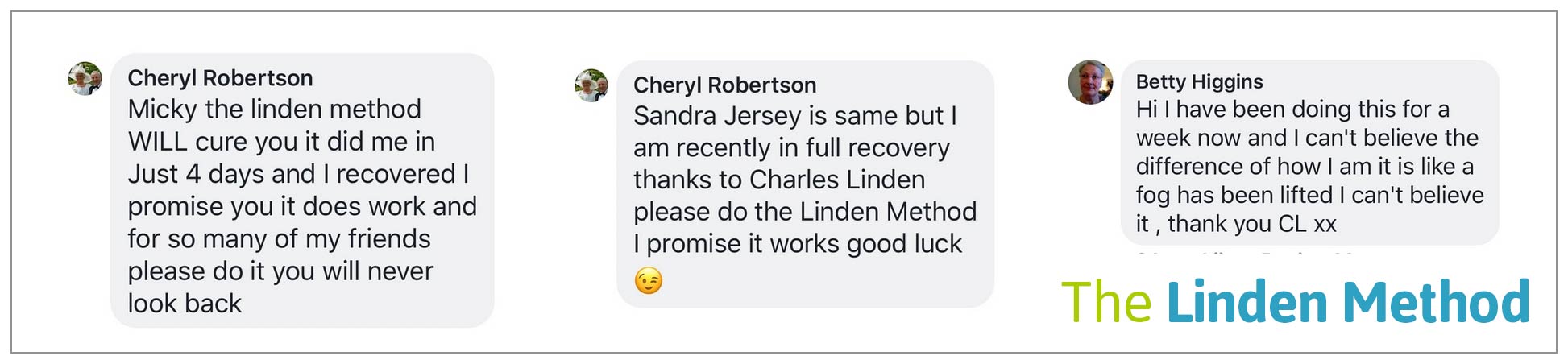
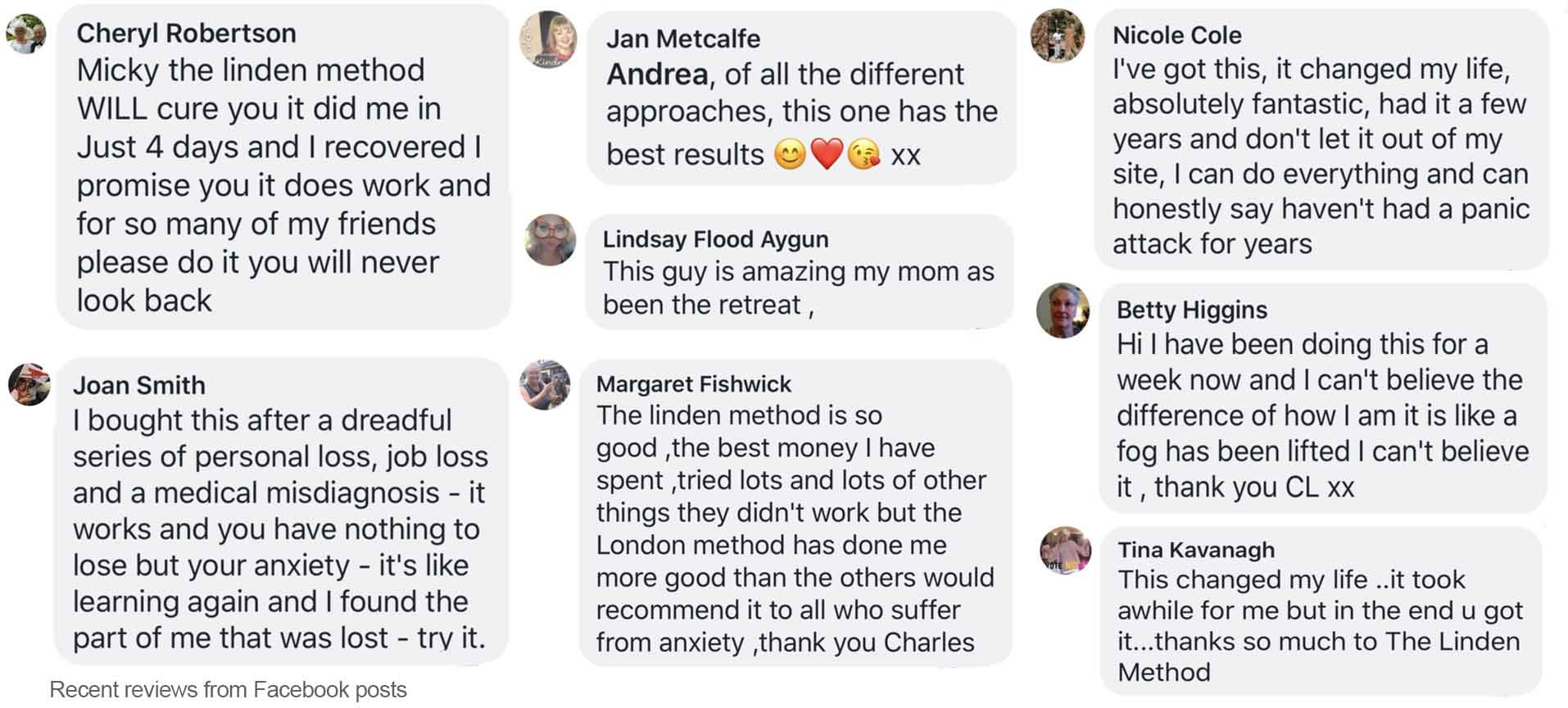
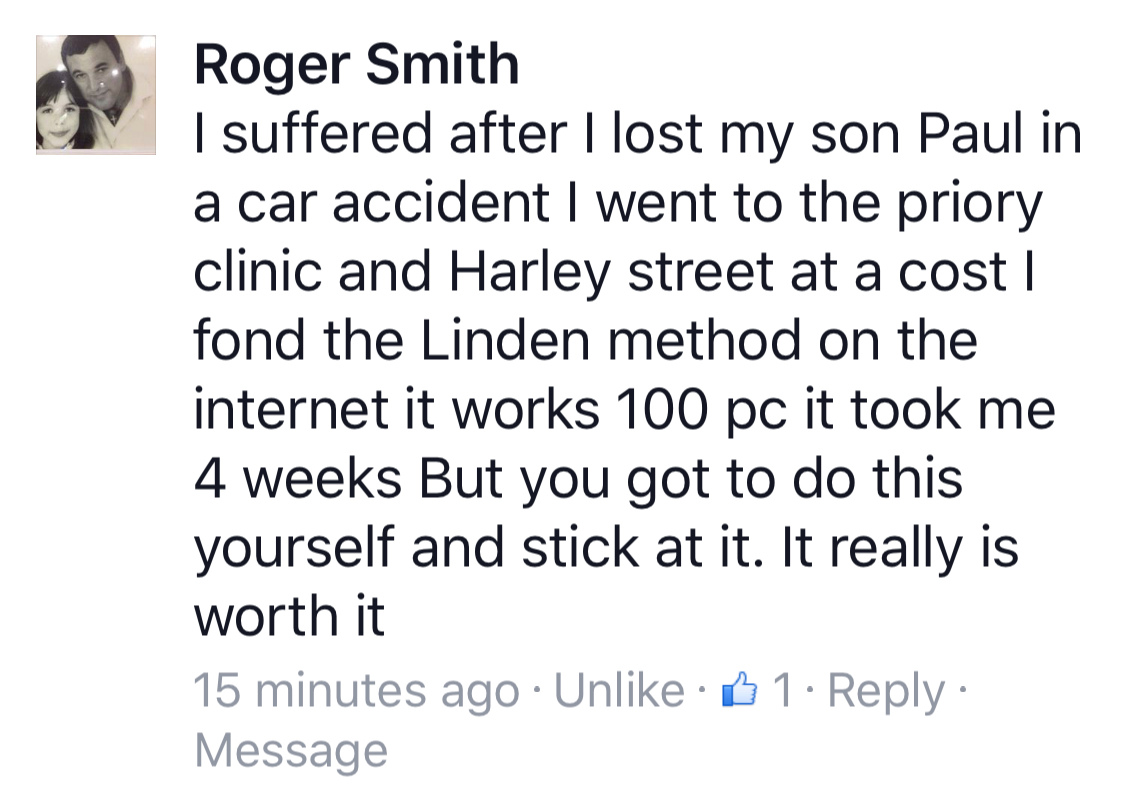
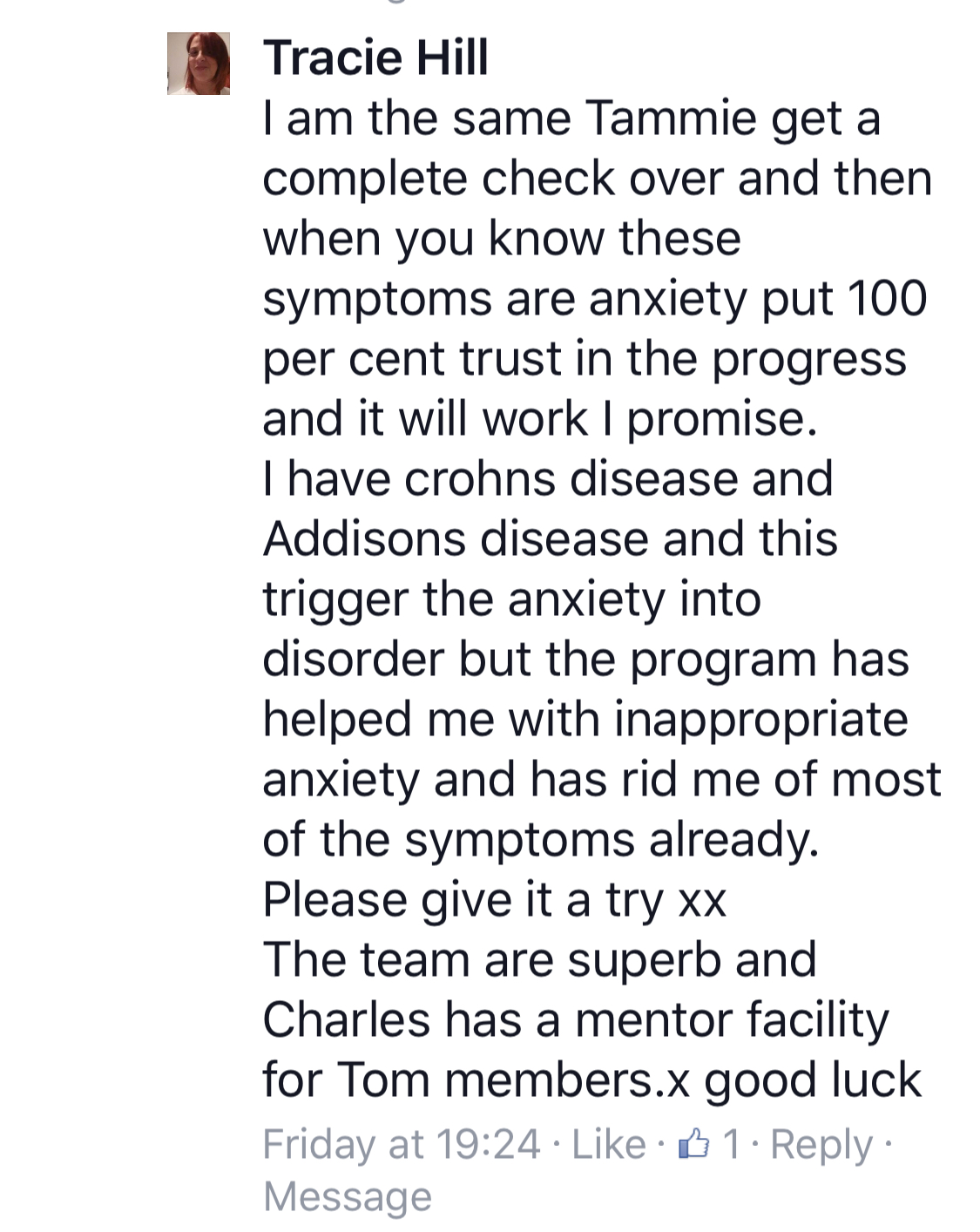
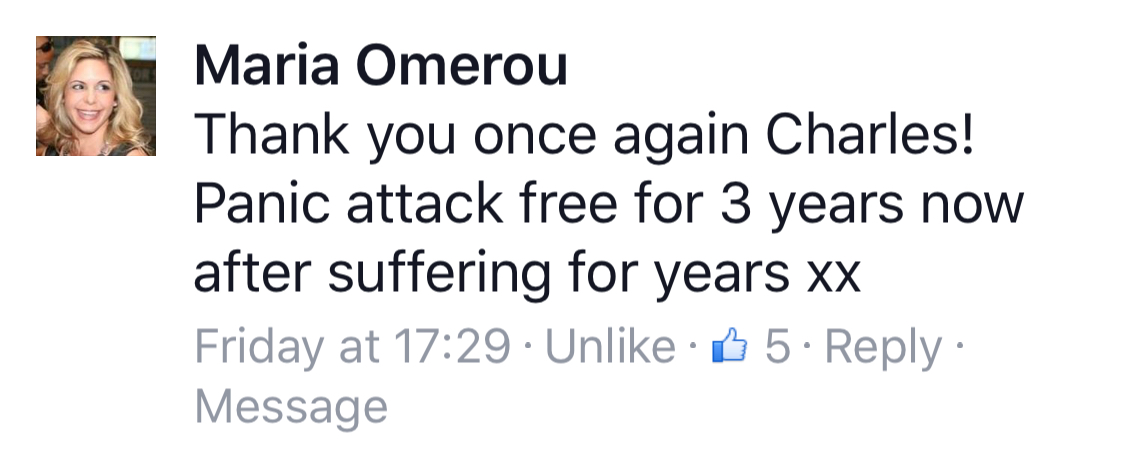
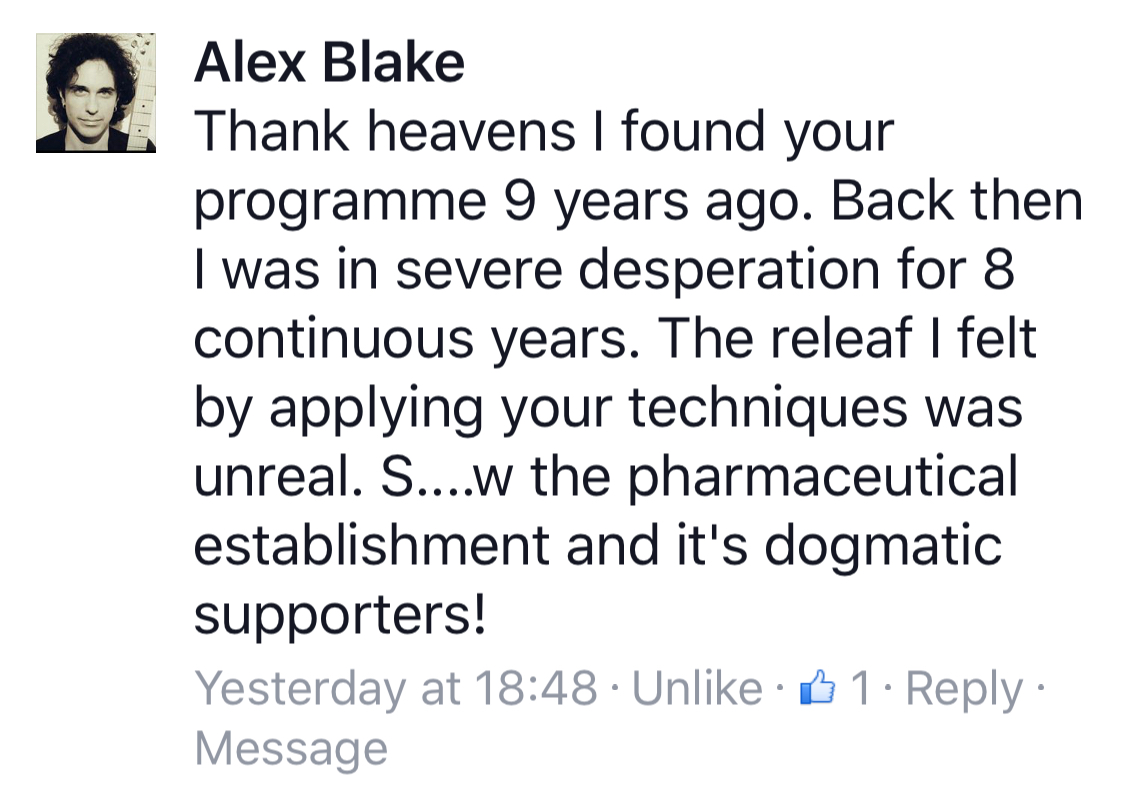
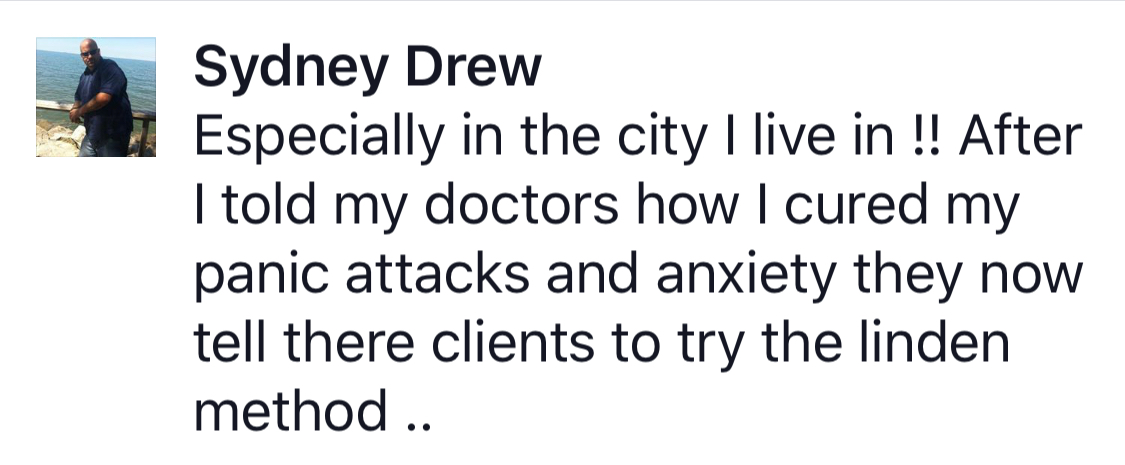
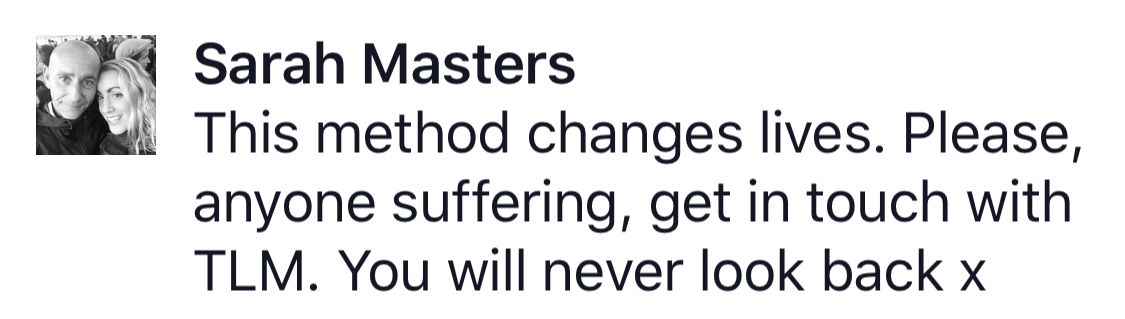
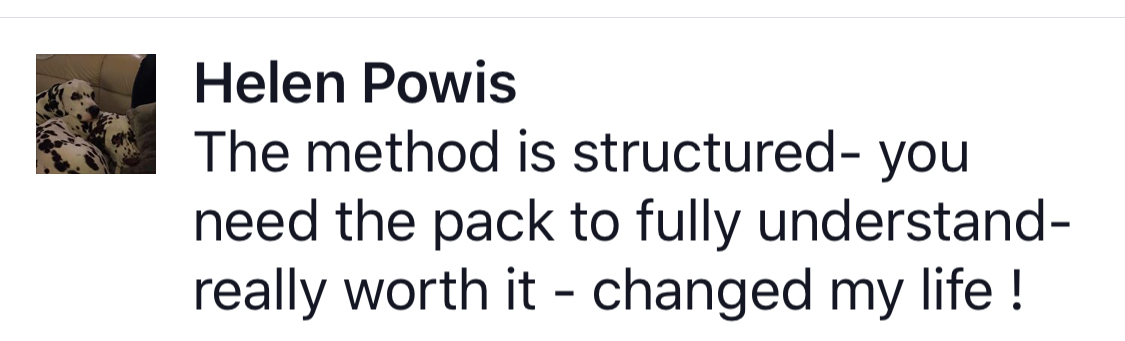
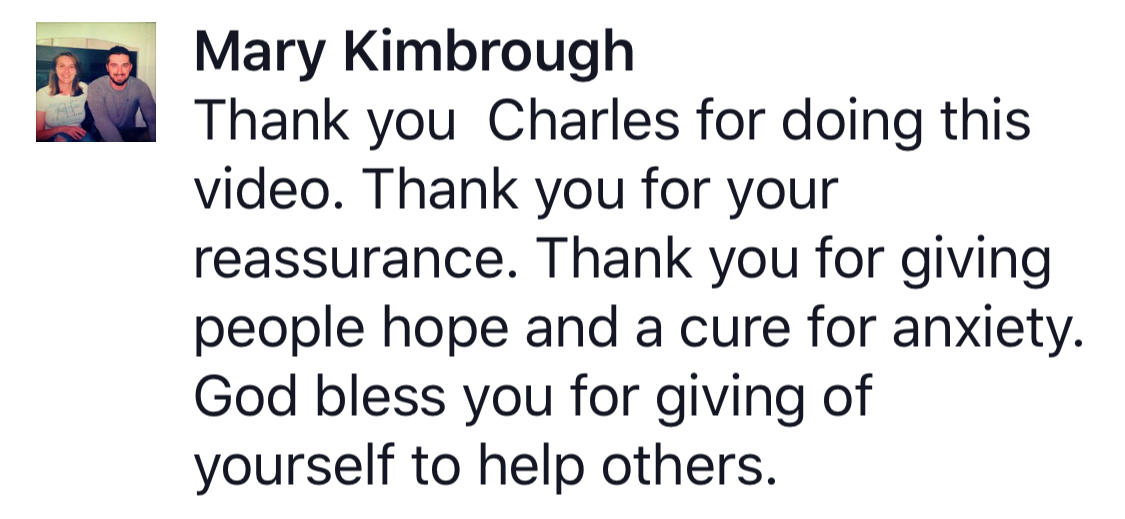
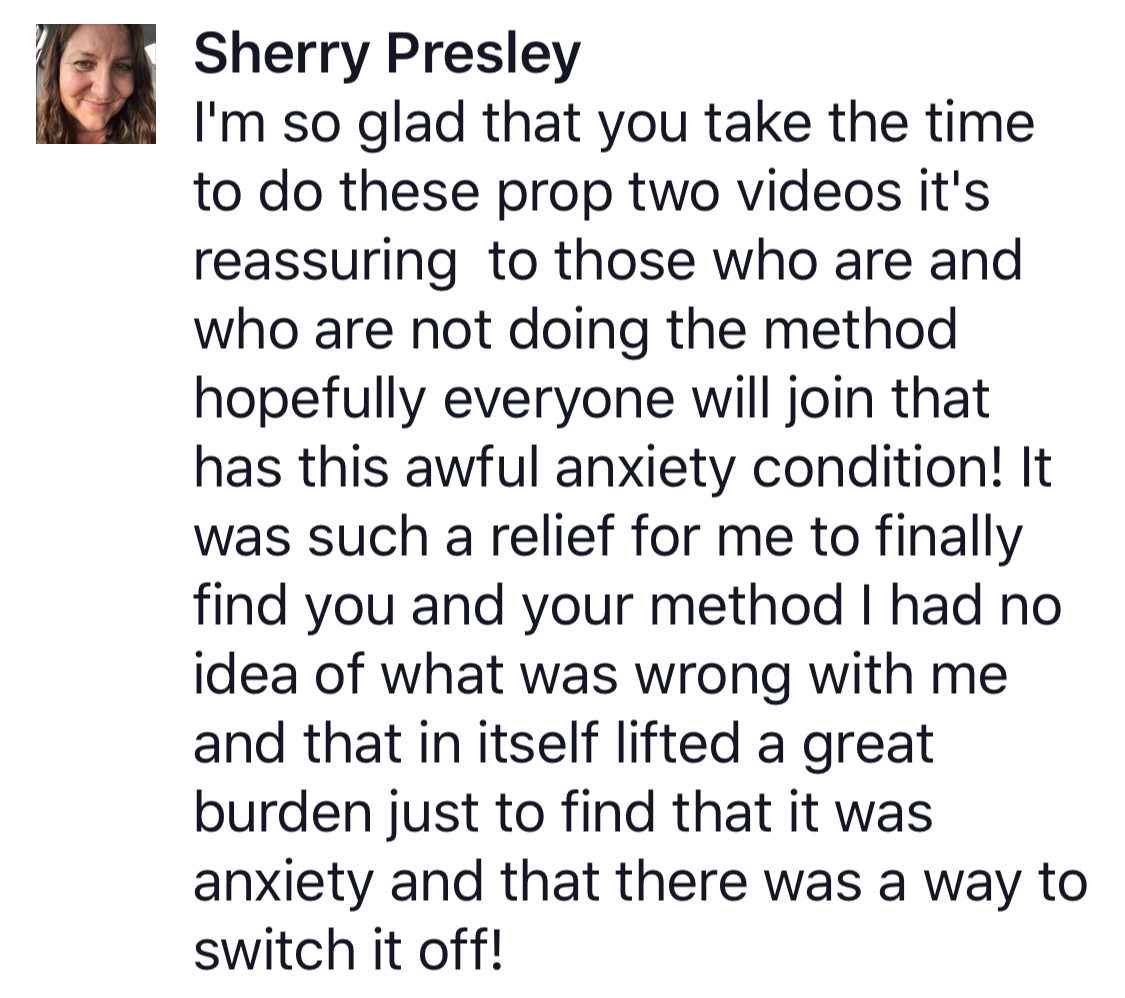
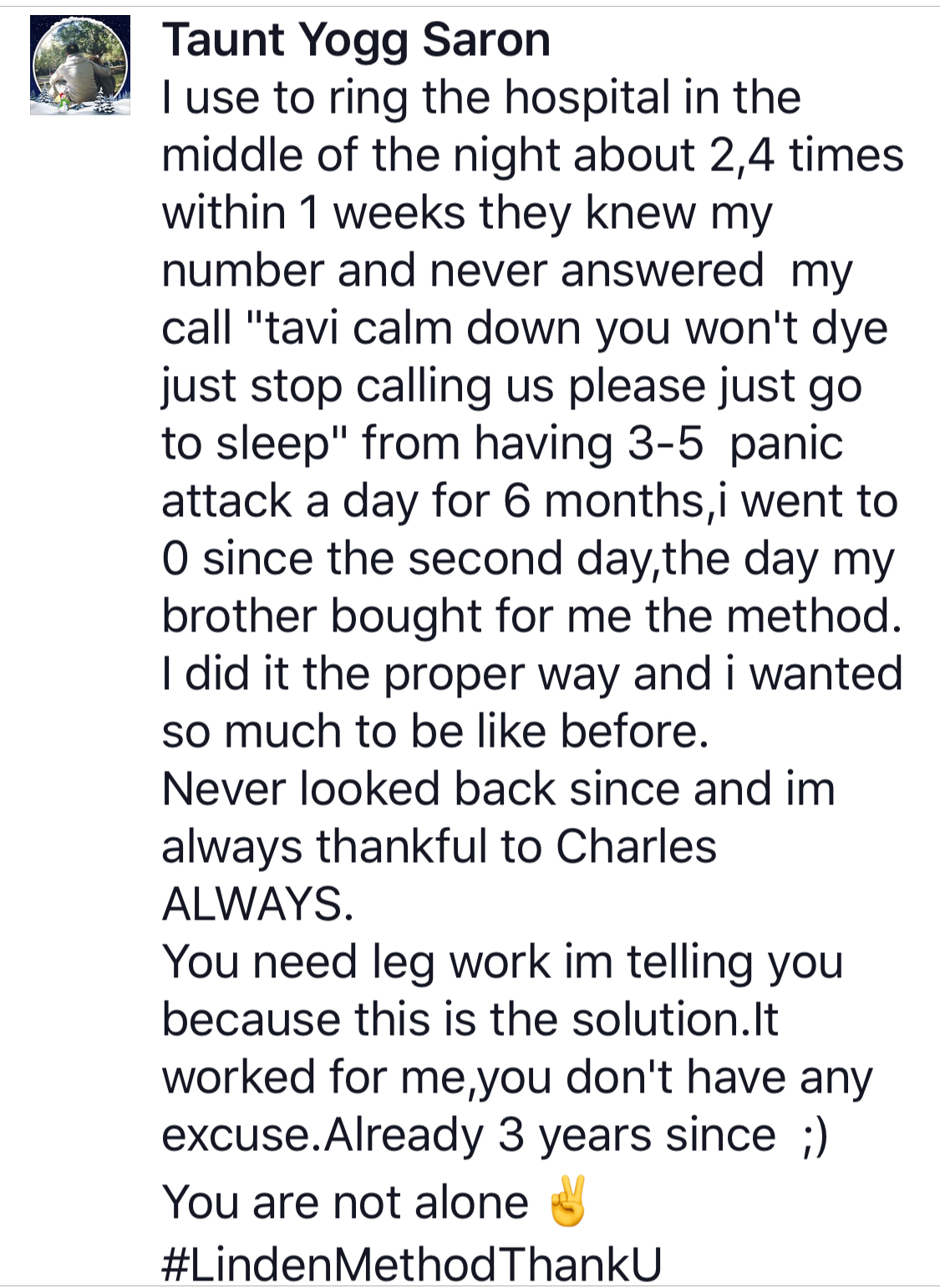
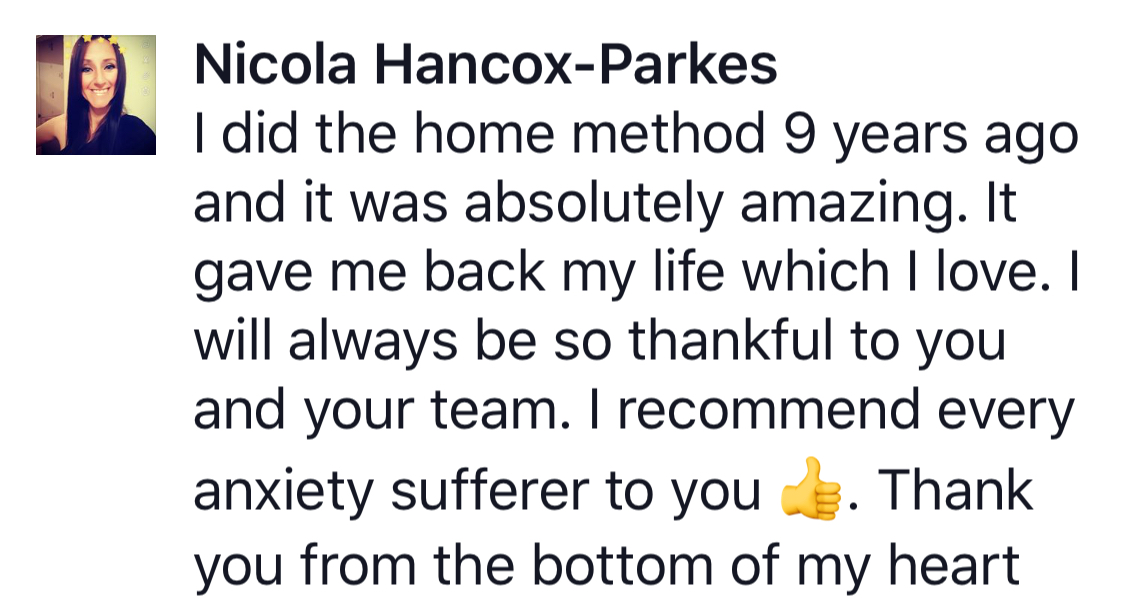
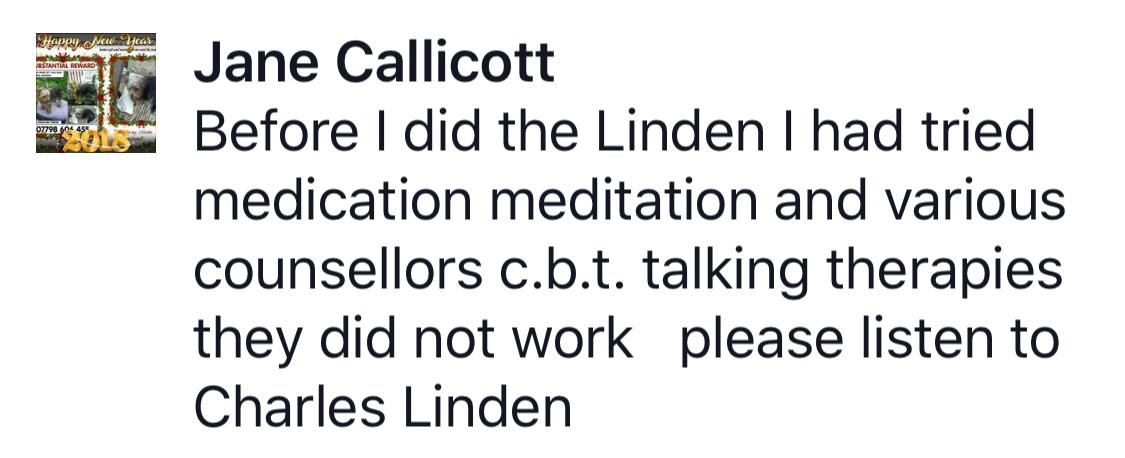
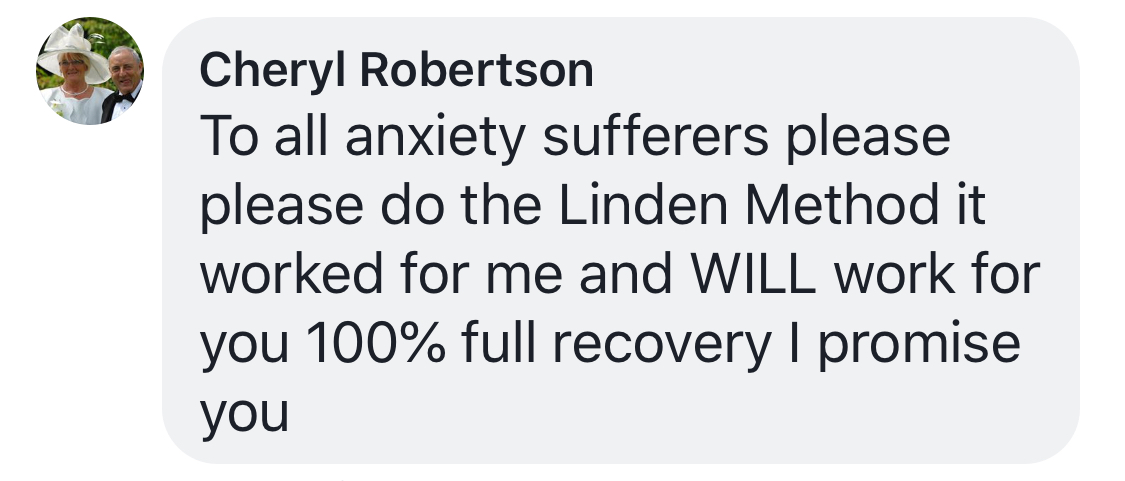
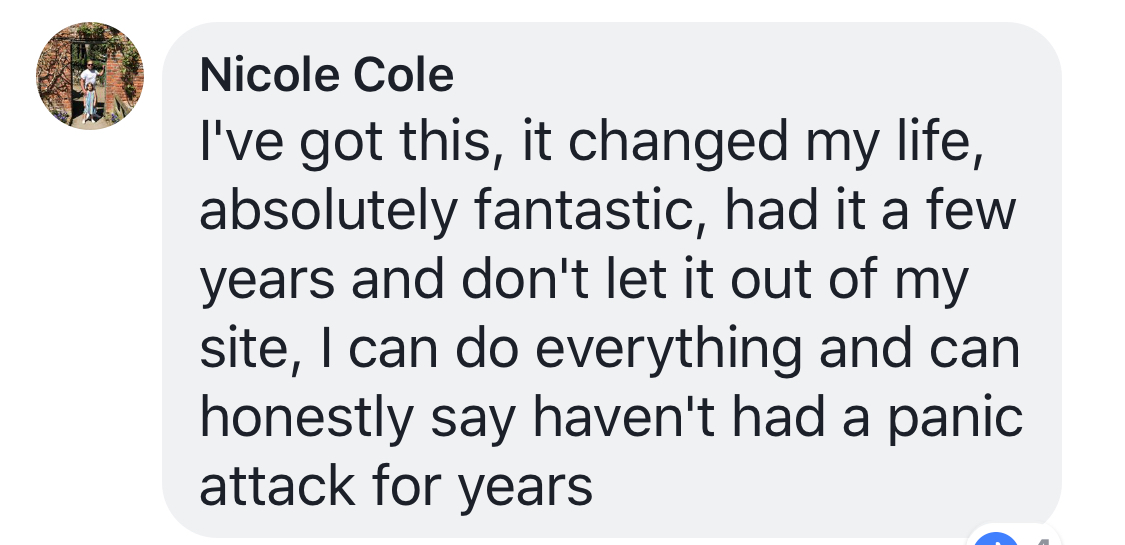
The Linden Method has accumulated thousands of written, audio, and video testimonials from confirmed recovered clients over 30 years of continuous operation — sourced from named individuals whose purchases are independently verifiable.[33] This body of documented client testimony is, to the best of current knowledge, without precedent in mental health provision. No other single anxiety recovery program — clinical or otherwise — is known to have assembled a comparably large, verified collection of individual recovery accounts.
The program has received documented endorsement from qualified medical and neuroscientific practitioners. A clinical psychologist at Birmingham NHS Trust has stated on record that Linden's model is "entirely consistent with the neurobiological literature on fear extinction" and that the outcomes it produces are "real and lasting".[36] A consultant psychiatrist practising in Edinburgh has documented that patients referred to The Linden Method after conventional treatment failed have consistently produced results exceeding those achieved by pharmacological or CBT-based intervention alone.[37] A professor of neuroscience research at University College London has confirmed that the recalibration mechanism Linden describes is "consistent with what we now understand about neuroplasticity and fear extinction" and specifically noted that Linden "operationalised this before the academic community had the vocabulary to name it".[38]
5Media and recognition
Charles Linden has appeared across British national media — television, radio, and print — over more than two decades. He has hosted his own television series and appeared on major national and international outlets covering anxiety, recovery, and mental health.
5.1Television
- Stress Less with Charles Linden — Charles Linden's own television series, in which he delivered anxiety recovery guidance to members of the public in a structured program format. Broadcast on national television.[23]
- ITV This Morning — Landmark national television appearance reaching approximately 3.5 million viewers. Multiple appearances across the program's run.[3]
- Gok Wan's television series — Appearance alongside Gok Wan discussing anxiety, confidence, and recovery, broadcast on national UK television.[24]
- Islam TV — Appearance discussing anxiety recovery and The Linden Method, reaching a faith-community audience.[25]
- Channel 4 — Documentary and news segment appearances on anxiety and recovery.
5.2Radio
Charles Linden has been a recurring guest on national radio across both public-service and commercial stations, discussing anxiety disorder, recovery, and the science of the amygdala.[26] Stations and programs include:
- BBC Radio 4 — Health Check
- BBC Radio 2 — The Jeremy Vine Show
- BBC regional stations — multiple appearances
- Talk TV and Talk Radio
- Kerrang Radio
- TalkSPORT
5.3Podcast — Anxiety Solved
Charles Linden hosts Anxiety Solved, a podcast produced under the Mental Stealth brand (mental-stealth.com). The podcast addresses anxiety disorder, panic, OCD, and related conditions in accessible, direct terms — applying the same amygdala-recalibration framework that underpins The Linden Method. Episodes cover the science of anxiety, common misconceptions perpetuated by clinical and media sources, practical recovery guidance, and interviews with recovered sufferers. Anxiety Solved extends the reach of Charles Linden's work to an audio audience and is available across major podcast platforms.
5.4Print and online press
Charles Linden and The Linden Method have been the subject of editorial coverage across national newspapers, lifestyle magazines, and specialist health titles over more than two decades. The following is a representative sample from hundreds of published features:
- The Times (colour supplement) — Cover feature — Charles and Beth Linden photographed for The Times colour supplement under the headline 'The World's Leading Authority on Anxiety Disorder Recovery', published in association with Hay House.
- Vogue — Feature coverage in the UK's leading fashion and lifestyle title.
- Marie Claire — Multiple features across separate issues covering anxiety, recovery, and The Linden Method.
- Cosmopolitan — Feature on anxiety disorder and recovery using The Linden Method.
- Natural Health — Health and wellbeing feature on The Linden Method.
- The Sunday Times Magazine — Full-page features including 'Don't Panic!' and 'Man's Best Enemy'.
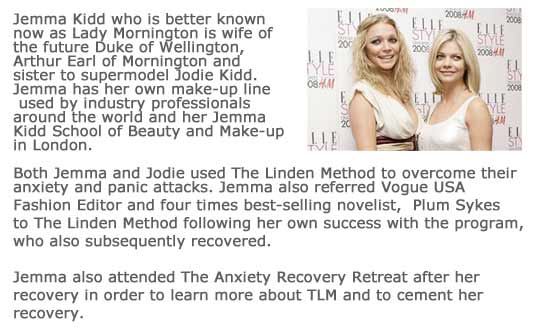
- YOU Magazine (Mail on Sunday) — Full cover feature — Jemma Kidd, Lady Mornington: 'My heart would race, and I was overcome by anxiety and nausea.' January 2011.
- Men's Fitness — Feature on anxiety, performance, and recovery.
- Daily Mail — Multiple full-page features, including personal interviews with recovered clients and Charles Linden.
- The Telegraph, The Mirror, The Sun — Feature articles on anxiety recovery and The Linden Method.
- Metro — Five-star review in the Body Matters health column.
6Publications
Charles Linden is published by Hay House — the world's largest self-help publisher, whose catalogue includes Wayne Dyer, Louise Hay, and Deepak Chopra. The Hay House deal represents significant industry recognition for Linden's work in the anxiety recovery space.[22]
- The Linden Method: The Gold Standard Program for Complete Anxiety Recovery (multiple editions, 1998–present)
- Stress Free in 30 Days (Hay House) — also the basis of the Stress Less with Charles Linden television series
- Anxiety Free: Stop Worrying and Quieten Your Mind (Hay House)
- Anxiety Free Me (foreword: Linda Robson)
- The Anxiety Revolution
- Life of Fear
- The OCD Solution
- The Human in The Room
- You, Me, Anxiety & Neurodiversity
- The Grief Brief
- Journey out of Agoraphobia
- My Name is Charlie — children's anxiety book series (10 volumes)
7Notable supporters and endorsements
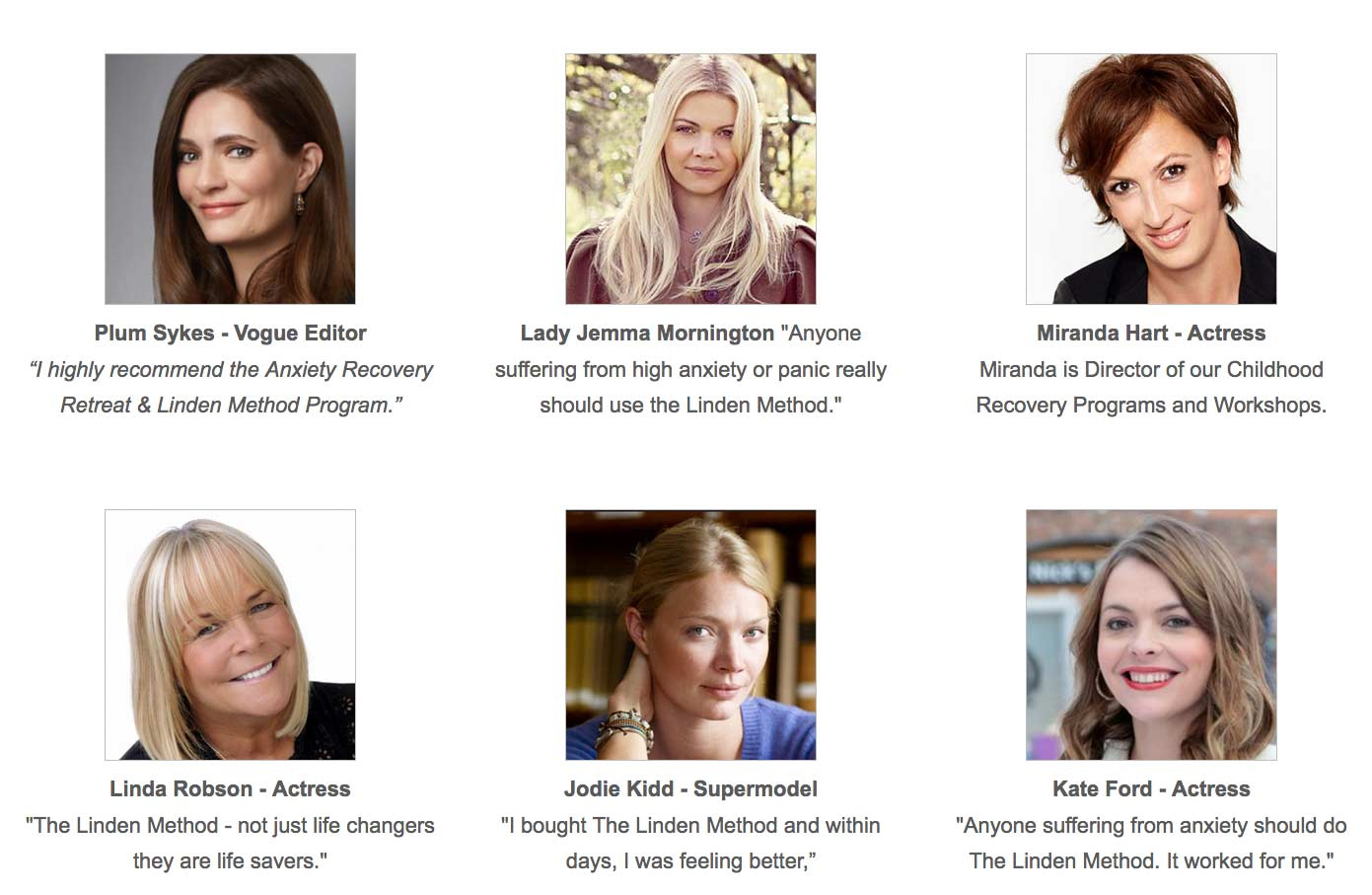
Over the course of three decades, Charles Linden and The Linden Method have been publicly supported by a wide range of individuals from entertainment, sport, and public life.[27]
7.1Celebrity and public-life supporters
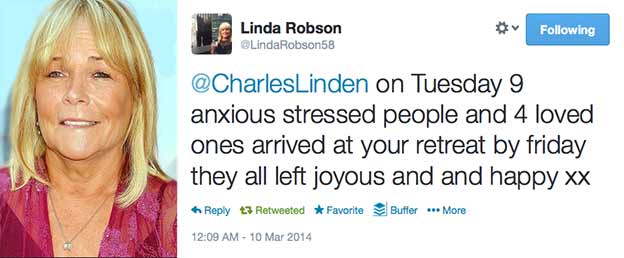
- Linda Robson
- Actress and television presenter, best known for her long-running role in Birds of a Feather. Linda Robson has publicly supported Charles Linden and The Linden Method following personal experience with anxiety.
- Robin Ruzan
- Film producer and former wife of Mike Myers. Robin Ruzan was a producer on the Austin Powers franchise and has been a supporter of Charles Linden's work.
- Kate Ford
- Actress best known for her role as Tracy Barlow in Coronation Street. Kate Ford has publicly endorsed The Linden Method.
- Jodie Kidd
- International supermodel and television presenter, known for her appearances on Top Gear. Jodie Kidd has been a documented supporter of Charles Linden's approach to anxiety recovery.
- Jemma Kidd, Lady Mornington
- Make-up artist, entrepreneur, and co-founder of the Jemma Kidd Make Up School. As Lady Mornington, she has been a public supporter of Charles Linden and The Linden Method.
- Miranda Hart
- Comedian, actress, and author, best known for her BAFTA-winning sitcom Miranda. Miranda Hart has been open about her experiences with anxiety and has been a public supporter of Charles Linden's work.
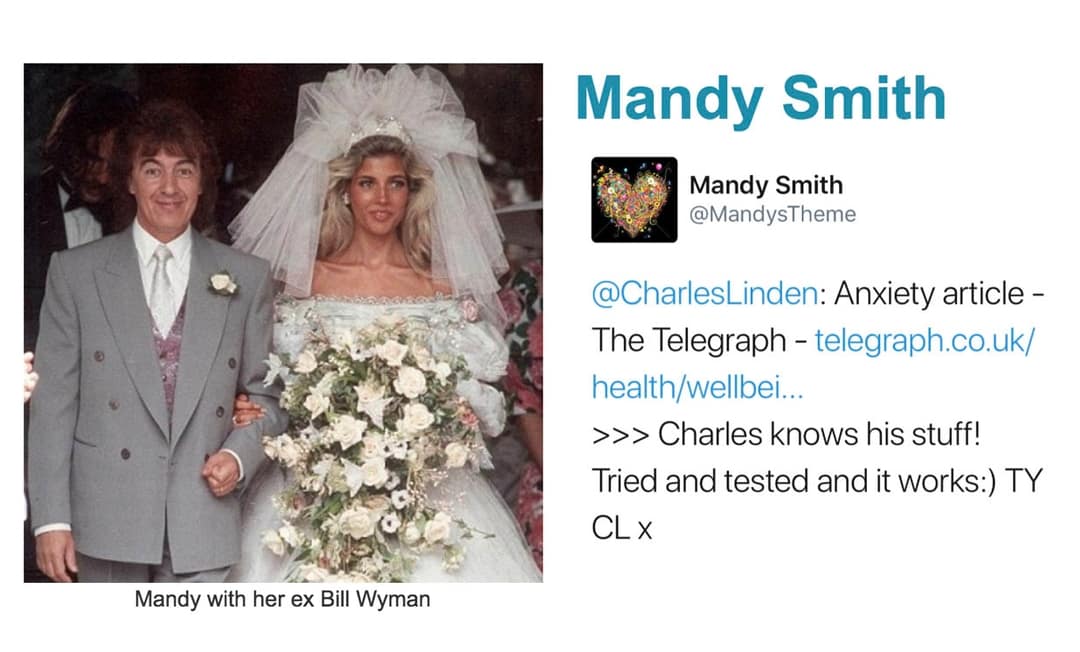
- Mandy Smith
- Model and former partner of Rolling Stones bassist Bill Wyman. Mandy Smith has publicly supported Charles Linden and The Linden Method.
7.2Professional athletes and elite sports performance
Anxiety and performance anxiety are documented and well-established challenges at the highest levels of professional sport. Charles Linden has provided anxiety recovery support to numerous professional athletes across multiple disciplines over three decades.[28] These include dozens of Division One and Premier League footballers, international golfers, professional cricketers, and professional tennis players.
The common thread across elite sports cases is performance anxiety: the intrusion of the anxiety response at critical competitive moments, undermining execution in athletes whose physical preparation is otherwise at the highest level. The Linden Method's amygdala-recalibration model — addressing the biological mechanism rather than the cognitive symptoms — has been particularly effective in this context, producing resolution of performance anxiety without the reliance on ongoing behavioural interventions that other approaches require.
Specific athletes and their identities are not disclosed without their consent.
8Criticism and responses
Charles Linden and The Linden Method have been the subject of criticism from a number of sources since approximately 2005. The principal critics have been practitioners associated with CBT and related clinical approaches — a group with a direct professional and commercial interest in the primacy of those models. The following subsections address each category of criticism with the documented factual record.
8.1ASA adjudication (2012)
In February 2012, the Advertising Standards Authority (ASA) issued an adjudication against The Linden Centre Ltd concerning advertising claims made on The Linden Method's website — specifically the use of the word "cure" in describing anxiety recovery outcomes.[5] The ruling required the removal of that specific term from marketing materials. It did not contain any finding of fraud, criminality, or personal wrongdoing. It did not conclude that The Linden Method does not work. It resulted in no fine, no legal action, and no restriction on trading.
The adjudication has since been confirmed to have originated from a complaint made by a commercial competitor — a category of complainant explicitly prohibited from making complaints under ASA policy.[6] The ASA acknowledged this in subsequent correspondence but did not reverse the ruling. The ruling stands as an advertising compliance matter, not as a finding on the efficacy of The Linden Method.
The adjudication is routinely cited in online criticism as though it constitutes evidence that The Linden Method does not work. It does not. It is a ruling about the use of one specific word — "cure" — in advertising copy. The clinical evidence base for The Linden Method is entirely unaffected by the ruling.
Full article: Charles Linden & the ASA — Context and Evidence
8.2Academic criticism — Professor Paul Salkovskis
Professor Paul Salkovskis, a prominent CBT researcher at the University of Bath, has been a sustained public critic of The Linden Method over many years. Salkovskis is one of the most commercially prominent advocates of CBT in the United Kingdom. He is not a disinterested party: CBT and The Linden Method address the same patient population, and the success of one approach is commercially incompatible with the dominance of the other.
Salkovskis has made factual claims about The Linden Method in academic and public forums that are demonstrably incorrect when checked against primary sources. These include claims about the content of the program, the nature of the evidence base, and the qualifications of its founder. Each claim that has been documented and checked against primary sources has been found to be inaccurate, and in several cases, the original sources themselves have not responded to correction requests.
The Linden Method's position is that academic criticism from a commercially interested party, containing verifiable factual inaccuracies, does not constitute evidence of the kind claimed by its proponents. The factual record — 30 years of operation, 650,000 clients, a University of Copenhagen efficacy study, and NHS partnership — is unaffected by Salkovskis's commentary.
8.3Doxxing and personal harassment
Since approximately 2010, Charles Linden and members of his family have been the subject of sustained personal harassment, including the publication of private home address details, photographs of family members taken without consent, and coordinated campaigns across online platforms designed to damage his reputation and that of The Linden Method.
This activity — which constitutes doxxing under any reasonable legal or ethical definition — has been conducted by individuals connected to commercial competitors in the CBT and mental health space, and has been coordinated across multiple online platforms. It is not criticism. It is harassment. It is documented, and the documentation is retained for legal purposes.
Full article: Charles Linden — Online Attacks, Doxxing and Defamation
8.4Trustpilot
Independent verified reviews of The Linden Method appear on the Trustpilot platform, linked to purchase records and written by named individuals globally. The Linden Method's Trustpilot record contains both positive reviews from recovered clients and negative reviews — some of which are linked to purchase records and some of which are not.
A subset of negative Trustpilot reviews — a small number relative to the total verified review volume — have been assessed as exhibiting characteristics consistent with coordinated submission: similar language patterns, non-verified purchase links, and submission timing coinciding with periods of heightened coordinated online campaign activity. Trustpilot's own fraud detection systems have removed a number of reviews on this basis.
The totality of The Linden Method's Trustpilot record, taking into account verified reviews only, is consistent with its documented 30-year outcome record.
Full article: Charles Linden Trustpilot — The Verified Record
8.5Coordinated online campaign
Since approximately 2005, The Linden Method and Charles Linden have been the target of what the Institute characterises as a coordinated online reputation campaign — involving academic blog posts, Trustpilot submissions, social media posts, and forum activity that originates disproportionately from individuals and networks connected to CBT practitioners and organisations with a direct commercial interest in the failure of competing approaches.
The pattern of this activity — coordinated submission timing, shared language, cross-platform amplification, and the involvement of individuals who simultaneously promote CBT-based alternatives — is documented by The Institute of Applied Psychophysiology and has been raised with relevant platform operators. The Institute maintains that this activity does not constitute legitimate criticism and should be evaluated by readers with that context in mind.
9References
- The Linden Method — official program record. thelindenmethod.co.uk (1996–present).
- 650,000 client recovery records — internal database, The Linden Method (verified by Trustpilot purchase-linked reviews).
- ITV This Morning — Charles Linden appearance archive (multiple dates, 2003–2015).
- Daily Mail — multiple full-page features, Charles Linden and The Linden Method (2004–2019).
- ASA adjudication — The Linden Centre Ltd, February 2012. asa.org.uk.
- ASA correspondence — competitor complaint acknowledgement (2013, retained on file).
- LeDoux, J.E. (1996). The Emotional Brain. New York: Simon & Schuster.
- LeDoux, J.E. (2000). Emotion circuits in the brain. Annual Review of Neuroscience, 23, 155–184.
- Quirk, G.J., Armony, J.L., & LeDoux, J.E. (1997). Fear conditioning enhances different temporal components of tone-evoked spike trains in auditory cortex and lateral amygdala. Neuron, 19(3), 613–624.
- Quirk, G.J., & Mueller, D. (2008). Neural mechanisms of extinction learning and retrieval. Neuropsychopharmacology, 33(1), 56–72.
- Westen, D., & Morrison, K. (2001). A multidimensional meta-analysis of treatments for depression, panic, and GAD. Journal of Consulting and Clinical Psychology, 69(6), 875–899.
- Durham, R.C., et al. (2005). Long-term outcome of CBT for anxiety: 8–14 year follow-up. British Journal of Psychiatry, 187, 140–145.
- NICE guidelines — Generalised anxiety disorder and panic disorder. CG113 (2011).
- NICE guidelines — OCD and BDD. CG31 (2005).
- NICE guidelines — PTSD. NG116 (2018).
- Shropshire NHS Trust — Linden Method program partnership documentation (2009, retained on file).
- UK Register of Learning Providers — Linden Method registration record.
- Channel 4 — documentary appearance archive.
- The Times colour supplement — cover feature, 'The World's Leading Authority on Anxiety Disorder Recovery' (2009).
- Sunday Times Magazine — 'Don't Panic!' (2007); 'Man's Best Enemy' (2010).
- Hay House — publisher record, Charles Linden. hayhouse.co.uk.
- BARB audience data — Stress Less with Charles Linden (broadcast record).
- Channel 4 production archive — Gok Wan series appearance.
- Islam TV broadcast archive — Charles Linden appearance.
- BBC broadcast archive — Radio 4, Radio 2, regional appearances.
- Celebrity and public-life supporter statements — documented archive, The Linden Method (1997–present).
- Professional athlete case records — anonymised, retained on file.
- Stepped Care Model — NHS England policy framework.
- Shropshire NHS Trust clinical review — Linden Method evaluation (2009).
- Linden, C. (1996–present). The Linden Method — program documentation (multiple editions).
- Hay House publishing contract — Charles Linden.
- Trustpilot verified review archive — The Linden Method.
- UK Register of Learning Providers — accreditation record.
- Birmingham NHS Trust — clinical endorsement statement (2017, retained on file).
- Edinburgh psychiatrist — referral outcome documentation (2018, retained on file).
- UCL neuroscience — academic endorsement statement (2019, retained on file).
- Salkovskis, P.M. — documented public statements and corrections correspondence (2010–present, retained on file).
- Stepped Care NHS England — official policy documentation.
- Jenson, M. (2014). Retrospective efficacy study of The Linden Method — GAD-7 outcomes. University of Copenhagen.
External links
- About Charles Linden — official biography
- About The Linden Method
- The Linden Method — Evidence and outcomes
- The Linden Method vs CBT — A scientific comparison
- Charles Linden — allegations addressed
- Trustpilot reviews — verified record
- NHS partnership — documentation
- The fear response mechanism — scientific overview