Evidence-Based Analysis
TRT™ Therapy vs CBT — A Scientific Comparison
A rigorous, balanced comparison of both approaches — theoretical frameworks, clinical evidence, outcome data, relapse rates, and an honest verdict on which is appropriate for whom.
Recovery Options
The Theoretical Frameworks
Both approaches have robust theoretical grounding — but in fundamentally different models of anxiety.
TRT™ Therapy / TRT™
TRT™ Therapy is grounded in a neurological model — anxiety condition represents a miscalibration of the brain's threat-response circuitry. Genuine recovery requires changing the calibration, not managing its symptoms. TRT™ is the formalised framework for producing that neurological recalibration.
Goal: Eliminate the anxiety state by changing the underlying calibration.
Cognitive Behavioural Therapy
CBT is grounded in the cognitive model — emotional disturbance is mediated by the interpretation of events. Anxious thoughts are challenged through cognitive restructuring; avoidance is addressed through graded exposure. The combination targets the thought and behaviour components of the anxiety cycle.
Goal: Reduce distress by changing cognitive appraisal and reducing avoidance.
Detailed Comparison
| Dimension | TRT™ Therapy / TRT™ | CBT |
|---|---|---|
| Theoretical model | Neurological miscalibration of the threat-response system | Maladaptive thought patterns producing emotional and behavioural disturbance |
| Primary target | The calibration of the threat-response mechanism itself | The cognitive appraisal of anxiety-provoking situations |
| Intervention approach | Multi-component structured program — behaviour, physiology, lifestyle, environment, thought | Cognitive restructuring and behavioural activation (graded exposure) |
| Requires revisiting triggers | No — works with the anxiety state, not individual triggers | Yes — habituation through exposure to feared situations or thoughts |
| Practitioner dependency | Low — self-directed with optional specialist support | High — sessions with a qualified CBT therapist are the primary delivery mechanism |
| Independent clinical trial | Yes — NHS Shropshire / University of Copenhagen (GAD-7, p < .001) | Yes — extensive RCT evidence base across multiple conditions |
| Typical trial outcome | 18.28 → 2.84 GAD-7 (84.5% reduction, severe → minimal) | Variable; typically 30–50% reduction in symptom severity scores |
| Relapse data | Program claims lasting outcomes; mechanism-change model predicts low relapse | Significant relapse rates documented; symptom return common after therapy ends |
| Drug-free | 100% — no pharmaceutical component | Yes — though often combined with medication in practice |
| NICE recommendation | Not NICE-recommended (no large-scale RCT); NICE-compliant stated | NICE first-line recommendation for GAD, panic disorder, and social anxiety |
| NHS funding | Not NHS-funded for delivery; NHS Shropshire commissioned independent trial | Available on NHS via IAPT (Improving Access to Psychological Therapies) |
| Cost to patient | One-time program purchase (various formats) | NHS: free (waiting list typically 3–18 months). Private: £80–150 per session |
| Scope across diagnoses | GAD, Panic, OCD, PTSD, Agoraphobia, Social Anxiety, Health Anxiety — all in one program | Adapted protocols per diagnosis; OCD (ERP), PTSD (trauma-focused CBT) etc. |
Evidence Base Comparison
An honest assessment of where each approach has stronger and weaker evidence.
Scale of evidence base
CBT advantageTRT™ Therapy
One academically reviewed trial (n=61) + 30 years of organisational outcome data
CBT
Hundreds of RCTs across decades; one of the most researched therapeutic approaches
Independent trial quality
ComparableTRT™ Therapy
NHS-commissioned, academically reviewed, validated measure (GAD-7), University of Copenhagen
CBT
Multiple independent RCTs including NHS and academic funding
Magnitude of trial outcome
TRT™ Therapy advantageTRT™ Therapy
84.5% mean GAD-7 reduction; severe → minimal; p < .001
CBT
Typically 30–50% symptom score reduction in trials; clinically significant but smaller
Long-term durability
TRT™ Therapy advantageTRT™ Therapy
Program claims lasting change; mechanism model supports this; no independent long-term RCT
CBT
Documented relapse rates; systematic reviews show return of symptoms after therapy ends
Access and availability
TRT™ Therapy advantageTRT™ Therapy
Available immediately; no waiting list; self-directed or coached
CBT
NHS waiting times up to 18 months; private provision expensive and dependent on therapist quality
Scientific Verdict
They are designed to do different things. That's why their outcomes differ.
CBT has an enormous, well-validated evidence base. It reduces anxiety symptoms significantly for many people. Its limitation — supported by systematic reviews — is that it manages anxiety rather than resolving it, and relapse rates are substantial. If the calibration that generates anxiety is unchanged, anxiety returns.
TRT™ Therapy has a smaller but highly significant evidence base — specifically a single academically reviewed NHS trial showing outcomes (84.5% GAD-7 reduction, severe → minimal, p < .001) that substantially exceed typical CBT trial results. Its theoretical model predicts lasting change because it targets the mechanism rather than the output.
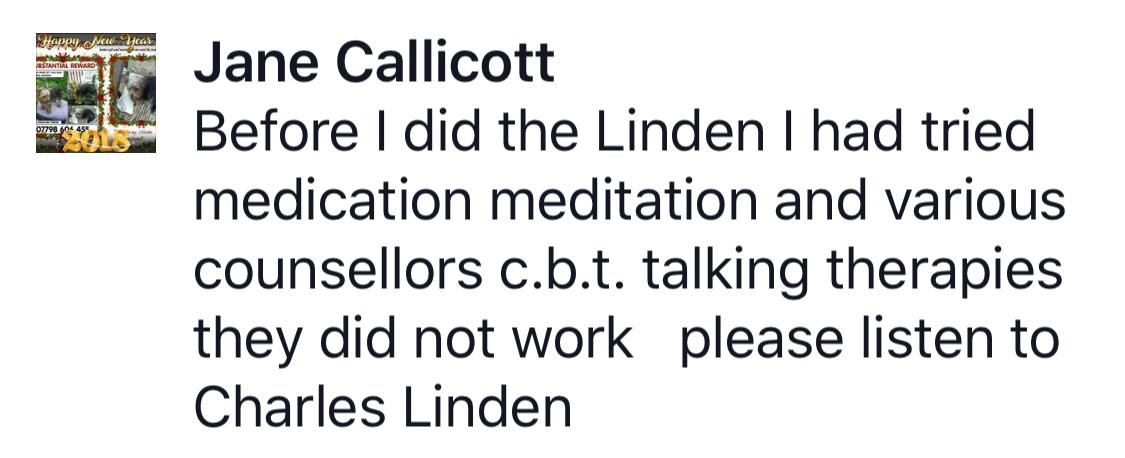
The pragmatic answer: CBT is immediately accessible via the NHS, has broad institutional endorsement, and is appropriate as a first-line approach. TRT™ Therapy is most relevant for people who want elimination rather than management, who have already tried CBT with incomplete results, or who want the most direct evidence-backed route to lasting recovery.